One Year Later
Welcome to the Weekly Edition
This week’s newsletter includes a more personal reflection than I normally include in my weekly emails. I want to share that up front.
In For Students, I’ll share the current topics for this week and go over the class locations that are at risk of being cancelled this semester. I’m also making a small change to our schedule for the next two weeks, so please take note.
In the section In The Garden, we’ll focus on rose pruning. January 15th is the classic start date for rose pruning season in Southern California, so we’ll talk about why this timing matters and go over my recommendations.
In Living Sustainably, you’ll learn about three important figures in the environmental and sustainability movements: Alexander von Humboldt, George Perkins Marsh, and Rachel Carson. If you’re interested in a brief history of the modern environmental movement, don’t skip this one.
Lastly, in Thought of the Week, I share a personal reflection on the Altadena fires, one year later.
For Students
This week in Regenerative Gardening, I’m switching weeks 2 and 3 (I’ll update the syllabi shortly).
We’ll discuss your garden in January and February, exploring what to expect during these two months. This includes rose pruning and dormant structural pruning for deciduous fruit trees. We’ll also hold our monthly discussion asking, “What are your plans for your garden this month?”
I’ll give a short introduction to community gardening, and we’ll spend some time discussing potential locations for our Spring Project. Please bring any suggestions for school or community gardens to class, and try to keep locations within five miles of your class site.
A quick schedule reminder for anyone who didn’t attend Week 1:
Our Week 5 field trip (February 2–February 6) will be at Glendora Gardens Nursery.
We will meet at the nursery, not our usual classroom locations. Field trip instructions will be shared in class and via email through official Mt. SAC channels.
In Fundamentals of Sustainability, we’ll explore the history of the environmental and sustainability movements, starting in the late 1700s and moving toward the modern day. We’ll briefly discuss the emergence of regeneration and what distinguishes regenerative thinking from sustainability. Our weekly discussion will ask what living regeneratively can look like in everyday life.
Unfortunately, several classes have very low enrollment this winter and are at risk of being cancelled. The following classes will be cancelled at the end of Week 2 if we do not reach minimum enrollment:
Regenerative Gardening - Tuesday at 10:30 a.m. (Palomares Community Center)
Regenerative Gardening - Friday at 10:00 a.m. (Wildlife Sanctuary)
Fundamentals of Sustainability - Wednesday at 3:00 p.m. (San Dimas Senior Citizen Center)
Fundamentals of Sustainability - Friday at 3:30 p.m. (Online)
If you are interested in enrolling in any of these classes, or know someone who might be, please contact me by Thursday, January 15, or join us in class to sign up.
In the Garden - Rose Pruning
It’s that time of year again! We’re just a few days away from rose pruning season here in Southern California.
I know some of you are thinking, “But Ben, my roses just started blooming again!” And you’re right - many roses are still blooming in January, which makes pruning feel counterintuitive. If you choose to enjoy those blooms for a few more weeks and prune shortly after January 15th, the world will not end. While this timing is considered optimal, nobody is going to force you to prune - not even me.
So why prune now?
Pruning roses as we head into the coldest part of the year helps encourage dormancy. Many areas of Southern California don’t get cold enough to force roses into full dormancy on their own, but dormancy is actually beneficial. Pruning around mid-January helps roses rest and prepare for stronger spring growth. Cutting them back, opening up the structure, and stripping off leaves also helps remove overwintering pests and diseases.
You may notice rose bushes that are never pruned and hold onto their leaves year-round. While they may survive, they often don’t thrive.
I often recommend chop-and-drop or composting garden debris - but roses can be an exception. In biodiverse gardens with wild-type or native plants, leaving material in place is often fine. However, many modern roses are highly hybridized and less resilient. In low-diversity rose gardens, it’s usually best to remove pruned material to reduce disease pressure.
How to Prune a Rose (General Guidance)
Pruning height can vary
Roses don’t need to be cut to the ground. Some benefit from a hard prune, while others do better when left taller. The goal is a healthy structure, not a specific height.Different rose types require different approaches
There is no one-size-fits-all method:Classic and hybrid tea roses are often pruned more heavily to encourage strong new growth.
Tree roses should be pruned carefully to maintain balance and protect the graft.
Vining or climbing roses are usually pruned for structure rather than size, keeping main canes and removing weak or crossing growth.
Open up the plant for airflow
Remove inward-growing, crossing, or crowded canes. Good airflow reduces disease pressure and helps the plant dry out after rain.Strip remaining leaves during pruning
This may feel harsh, but it’s beneficial. Removing leaves helps clear away overwintering pests and encourages fresh, healthy spring growth.Make cuts above outward-facing buds
Pruning above buds that face away from the center of the plant helps guide new growth outward, keeping the rose open and well-shaped.
If you’re unsure, remember that roses are resilient - thoughtful pruning is far better than no pruning at all.
You might also consider raking back old mulch and placing fresh wood chips around the rose after pruning. You don’t need to discard old mulch - just avoid burying the base of the plant and leave some open soil near the crown.
Fertilizing should wait until new growth begins, often around March, depending on weather. And remember, choose organic slow release over synthetic - and leave the systemic pesticides out of the picture. They often cause more harm than good.
While I haven’t produced my own rose-pruning video yet, I often play this short, video in class. It will walk you through the rose pruning process in 4 steps.
Watch here: https://www.youtube.com/watch?v=J6la_YikkQc
One quick note: As is mentioned in the video, while some gardeners use small amounts of glue on fresh pruning cuts - I don’t recommend this practice. You don’t need to seal cuts after pruning. Clean, well-placed cuts and good sanitation are all you need.
Living Sustainably - Environmental Foundations
This week in Fundamentals of Sustainability, we’ll explore the origins of the western environmental and sustainability movements.
This brief history looks at three figures: one who has largely faded from public memory, one who was never widely famous, and one who is often referred to as the mother of the modern environmental movement.

Alexander von Humboldt
(1769-1859)
Alexander von Humboldt was a Prussian naturalist, explorer, and polymath whose travels through South America in the late 1700s and early 1800s fundamentally changed how people understood nature. Rather than viewing plants, animals, climate, and geography as separate subjects, Humboldt saw nature as an interconnected whole - a web of relationships shaped by climate, land, and human activity, explaining why some today refer to him as the father of ecology. He spoke openly against slavery and condemned the mistreatment of Indigenous peoples in both South America and the United States, views that were far from common among European scientists of his time. Despite having countless places, species, and ideas named after him, Humboldt’s influence faded in the 20th century, particularly during World War II, when German thinkers were often sidelined in English-speaking countries. Much of what I know about Humboldt comes from Andrea Wulf’s The Invention of Nature, which beautifully captures how deeply his ideas shaped modern ecology and environmental thinking.
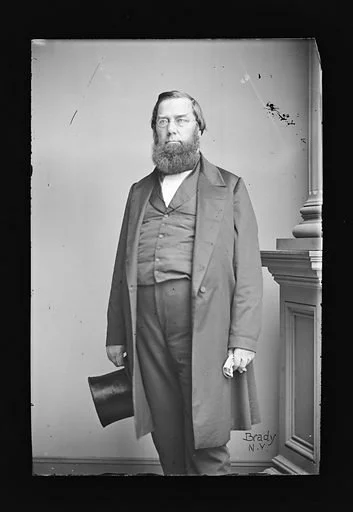
George Perkins Marsh
(1801-1882)
George Perkins Marsh was an American congressman, diplomat, and scholar who is far less well known today than he deserves to be. Through his travels in Europe and the Middle East, Marsh became fascinated by the rise and collapse of ancient civilizations. He noticed a troubling pattern: many societies had cleared their forests, degraded their soils, and ultimately undermined their own ability to survive. In 1864, he published Man and Nature, a book that argued humans were not passive inhabitants of the natural world, but powerful agents capable of damaging it on a large scale. While some of his scientific conclusions were later refined, Marsh’s central idea - that human actions could permanently alter landscapes - helped lay the groundwork for conservation, forestry, and sustainability thinking in the United States.
As Marsh himself warned, “Man is everywhere a disturbing agent. Wherever he plants his foot, the harmonies of nature are turned to discords.”
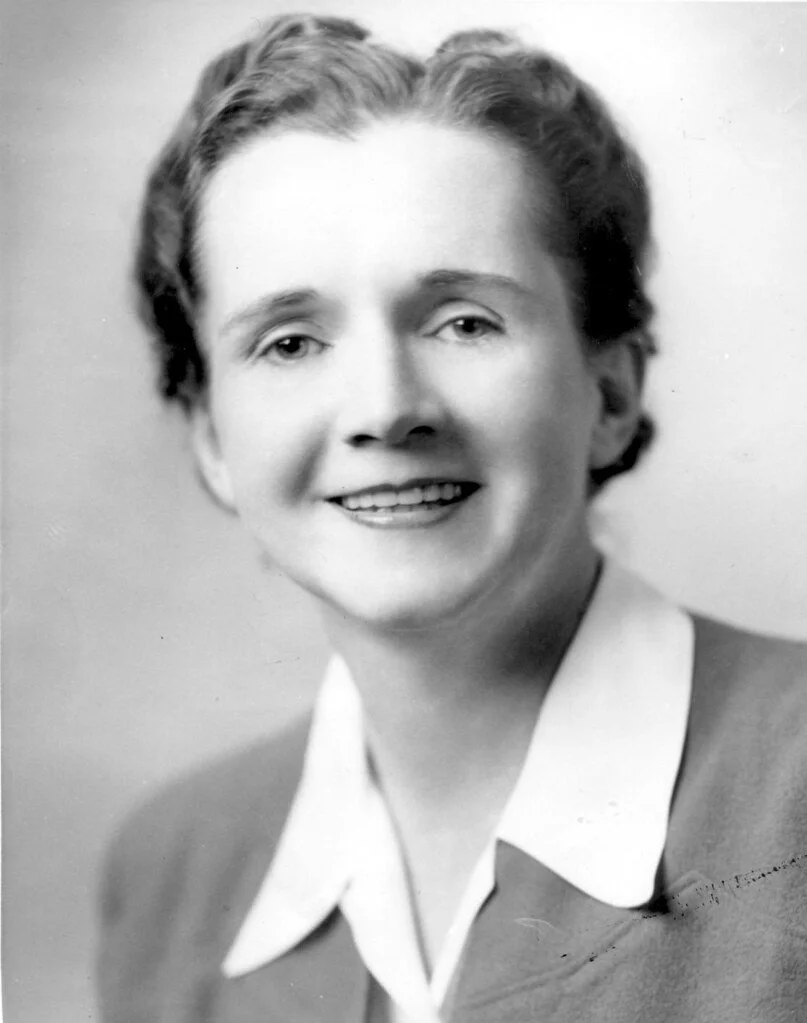
Rachel Carson
(1907-1964)
Rachel Carson is often described as the mother of the modern environmental movement, and for good reason. A marine biologist and gifted writer, Carson brought scientific research to the public in a way that was clear and compelling. Her 1962 book Silent Spring challenged the widespread and largely unquestioned use of synthetic pesticides, including DDT, by documenting their impacts on wildlife, ecosystems, and human health. Carson faced intense criticism and personal attacks, many of which attempted to discredit her rather than engage with her evidence. Despite this, her work reshaped public awareness, influenced environmental policy, and helped inspire decades of environmental action. Tragically, Carson passed away before she could fully see the long-term impact of her work.
This is not a complete history, but it serves as a reminder that concern for land, water, and long-term stewardship is not new. While Indigenous peoples have long voiced these concerns, even within western history we find individuals who listened, observed, and spoke up.
Thought of the Week - One Year Later
One year ago, the Altadena fires changed how I understand loss, community, and resilience.
I still remember that day clearly. It began with extreme winds across the area. After work, I went to my parents’ home in Monrovia, and not long after arriving, my nephew and I heard a loud explosion outside. A structure nearby fell onto a power line and caught fire. In those heavy winds, we were concerned the fire may spread to my parent’s house, and immediately began gathering important documents in case we needed to evacuate.
That fire was put out by the evening, but the power was gone, cell service was unreliable, and everyone was hungry.
My nephew and I decided to go get food for the family. While driving, we noticed an orange glow on the horizon toward Pasadena. Concerned, we drove closer and realized just how large the fires were. Not long after returning, my sister and her family came to my parents’ house to get away from the smoke. That night, the fire began creeping over the mountains toward Monrovia, and my parents received an alert that they might need to evacuate. None of us really slept.
The next morning, my sister and her family returned to Altadena to check on their home. Communication was still unreliable, and none of us fully understood what had happened. When my sister called me later that day, she told me their house was gone.
I didn’t lose a home. I didn’t live in Altadena. And I want to be clear about that. I won’t pretend this impacted me as much as the actual residents.
But Altadena has always been part of my life. My grandparents lived there. My family has deep roots in the area. I spent years driving those streets, visiting family, attending events, and feeling connected to that place. The loss still feels personal. Even now, I find it difficult to return. Seeing satellite images once was enough.
The fires taught me something I already “knew,” but hadn’t fully felt before: nature does not bend to our assumptions of control. No amount of wealth, power, or accumulation of material things guarantees our safety - or our happiness. Even when we do everything “right,” things can still fall apart.
What matters most, in moments like these, is resilience - not just in infrastructure, but in relationships. Knowing your neighbors. Caring for one another. Being willing to show up for one another.
I don’t have clean answers or easy solutions. But I do believe this: if we want to face an uncertain future, we need to build communities rooted in care, cooperation, and preparedness - long before we’re tested.
That is the lesson I continue to carry with me, one year later.
