When to Trust, When to Act
Welcome to the Weekly Edition
Good morning, everyone,
About six weeks ago, I found a colony of aphids blanketing our young plum tree — and I decided to do absolutely nothing about it. No spray, no hose, no squishing. I just left them there. This week I found out whether that was a mistake. The whole story (and some pictures) are waiting for you below.
There's a lot packed into this one: the semester is officially behind us (certificates included), a big overdue update from the garden, and a heads-up that Hugelkultur Chapter 2 lands on YouTube this Thursday. I’m also looking for a new time for my live stream. Vote for the one time that works best for you here.
Let's get into it.
For Students
That's a wrap on the semester. Before anything else, I just want to say thank you — for showing up week after week, for your questions, and for the curiosity you brought to every class. I'm grateful for every one of you, and it was a genuine pleasure to teach you this term.
Requesting Your Certificate
If you completed both Regenerative Gardening and Fundamentals of Sustainability, you've earned a certificate of completion. To request yours, head to the form here and fill it out: https://tinyurl.com/vrecertificate. That's it — The office will take care of the rest.
Looking Ahead to Next Semester
If you're planning to keep going with me, here's a small nudge: go ahead and register for next semester's online classes soon if you haven't yet, since that's what gives you access once we begin. I'm finishing up the syllabi now, and they'll be live by June 21st at growingwithprofessorbrown.com/classes. I'll share that link again in a future issue, so there's nothing you need to keep track of today.
A Reading List on the Way
A student recently asked me for my book list — and it's a good idea, so I'm finally doing something about it. I'll be putting a recommendations page up on the website before long, so keep an eye out for it. Coming soon!
Teaching Updates
This is technically my week off from our regular classes — though "off" is doing some heavy lifting there. The high school HSR program kicks off this week, and it's the start of the busiest stretch of my whole year. For the next five weeks or so, I'll be running hard.
So a small ask: if you email me during this stretch and I'm slower to reply than usual, please know it's nothing personal. I'll get back to everyone — it just might take a few extra days.
One more thing I'd love your help with. With my Monday evenings now taken up by teaching, the old Monday livestream time no longer works, so I'm hunting for a new slot. I've put up a poll on YouTube — vote for the one time that works best for you here: https://www.youtube.com/post/UgkxjsDuoiWP6kU5qyJZFXZJpMJYmTPWBbN1. If you've got a second or third choice (or if honestly any time works for you), drop it in the comments. I'll give it about a week to gather responses, then announce the new time. More on that first stream back down below.
In the Garden — Yard Update
It's been a few weeks since I gave you a proper garden update, and even longer since a livestream, so there's a lot to catch you up on. My parents' yard is absolutely going right now. Let me walk you through it.
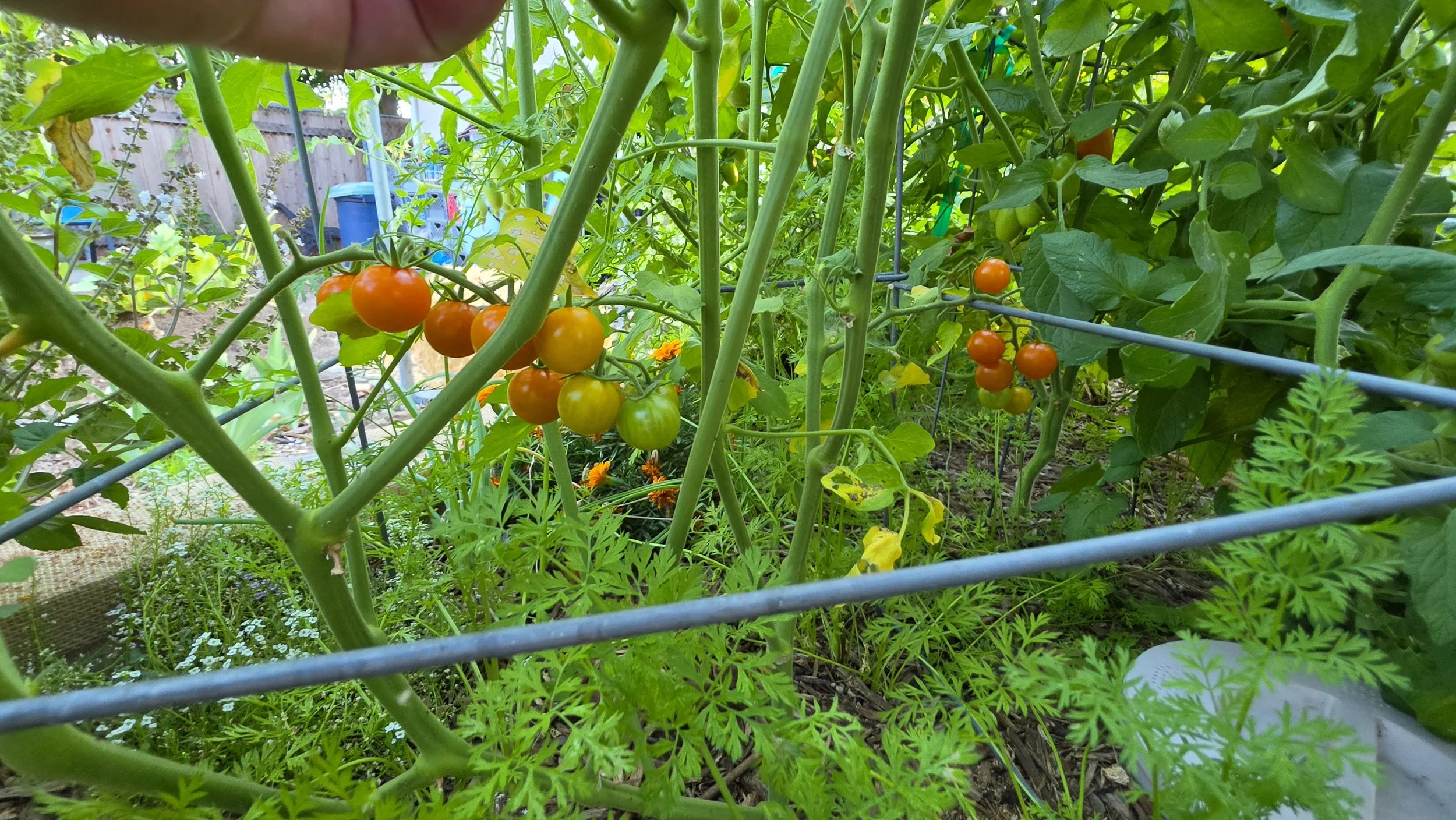
Sungold tomatoes
The tomatoes in the hugelkultur bed are thriving. The Sungolds are coming in sweet and gold, and honestly the whole bed is loving this weather. It's not all perfect — I've had to keep cutting early blight out of the Sungold, and there's some kind of canker on the Cherokee Purple I haven't pinned down yet (could be fungal, could be physical damage to the stem). But those are small problems in an otherwise happy bed.
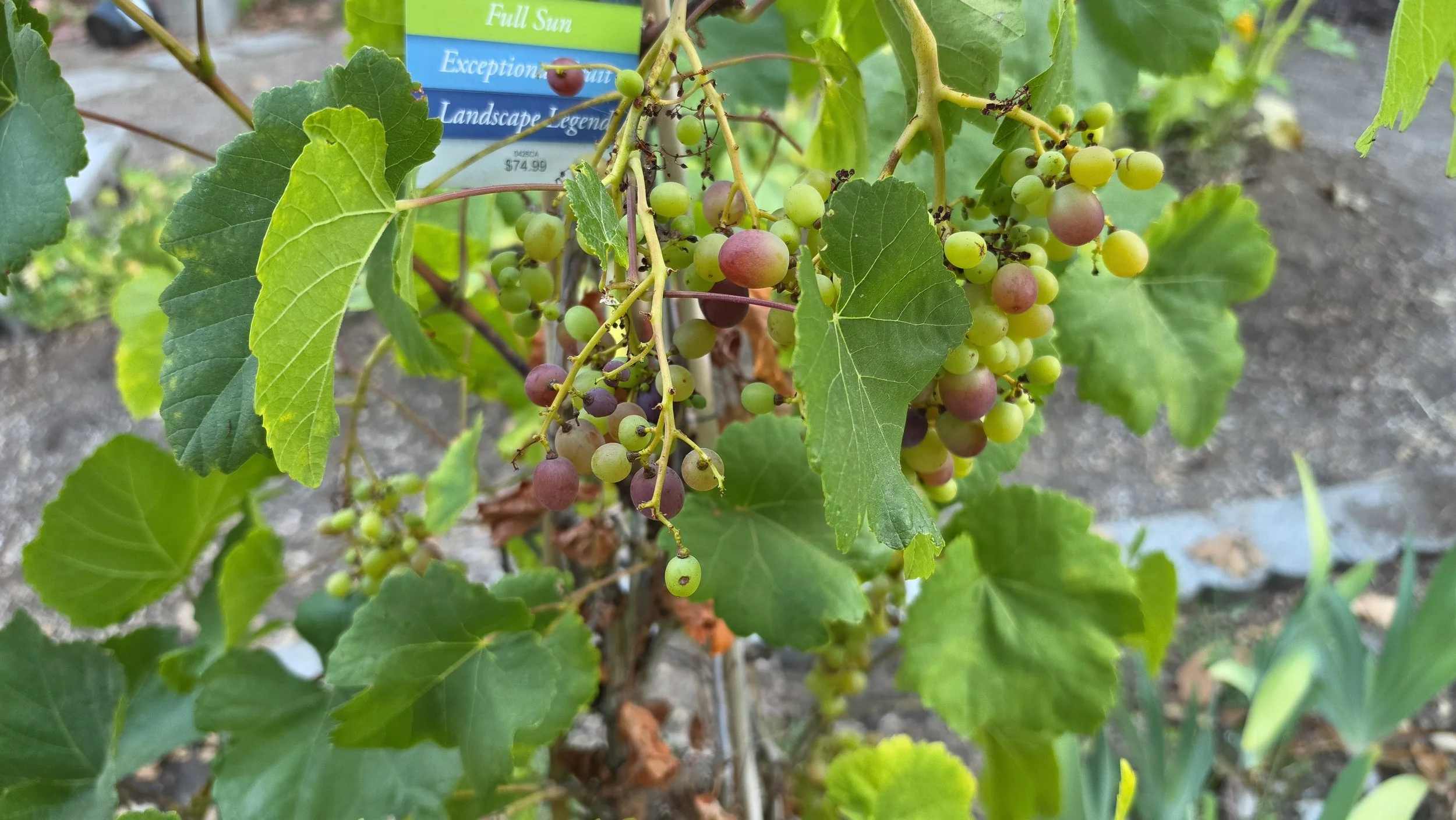
Grape vine
This is the grape I planted for my dad. We decided to leave the grapes on the vine this year, which means the plant itself hasn't put on much growth — and, full honesty, I've been a little lazy about getting the trellis up. That's on the list for this week. The trade-off is that the grapes are already ripening, and I snuck a taste of one that was just shy of ripe. Even early, it was delicious.
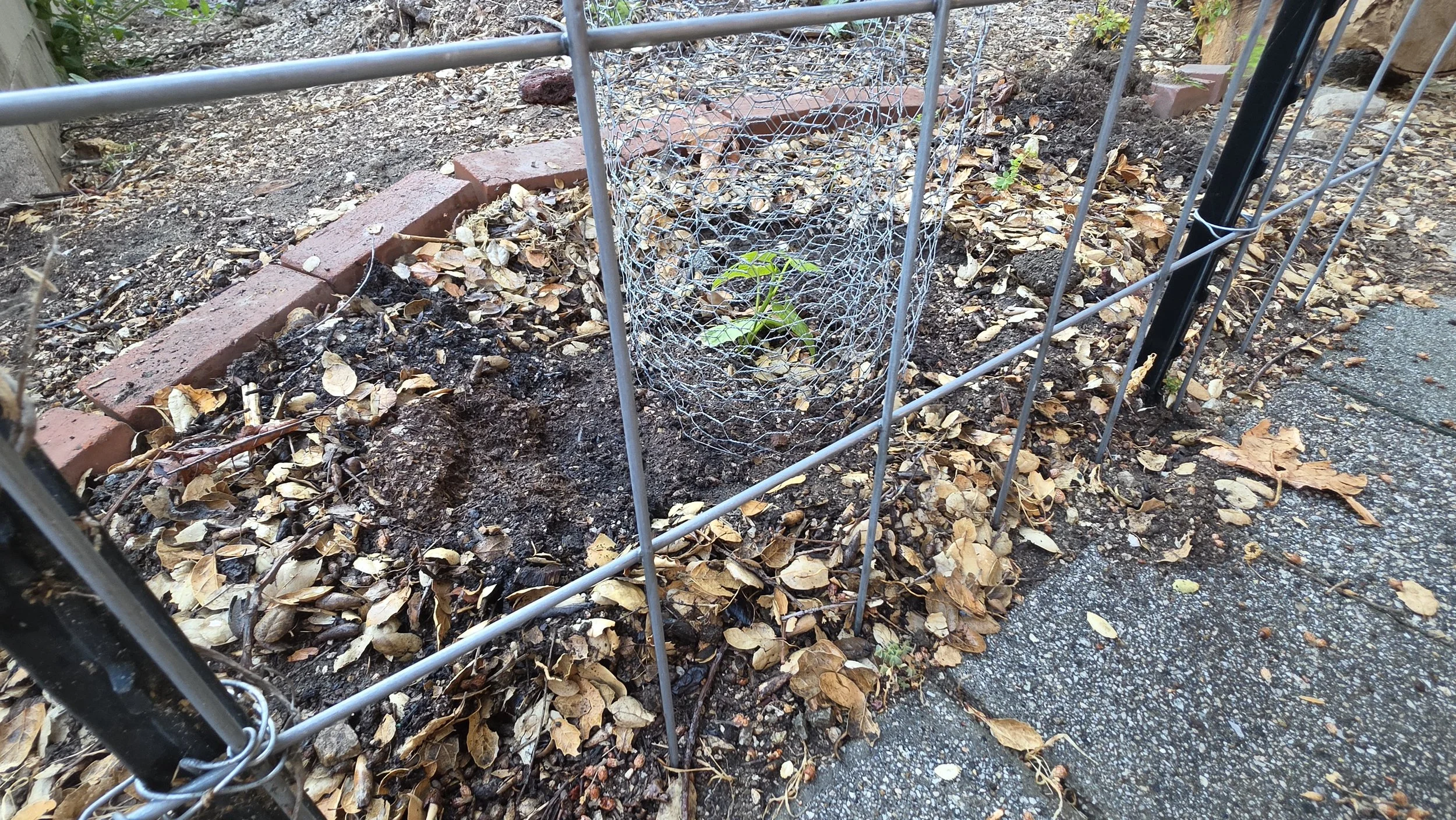
Chayote transplant
Here's a freshly transplanted chayote. I'd started two — one in the ground, one in a pot — and the in-ground one didn't make it. The potted backup did, so it got promoted to the best chayote spot in the yard, protective barrier and all. This photo was taken right after transplanting, so it'll be a while before it takes off; I'm not expecting fruit this year. Nearby I'm also trying Red Runner cowpeas for the first time — supposedly the vines run ten to twelve feet. I have no idea yet whether I even like cowpeas, but they fix nitrogen, so they earn their keep regardless.
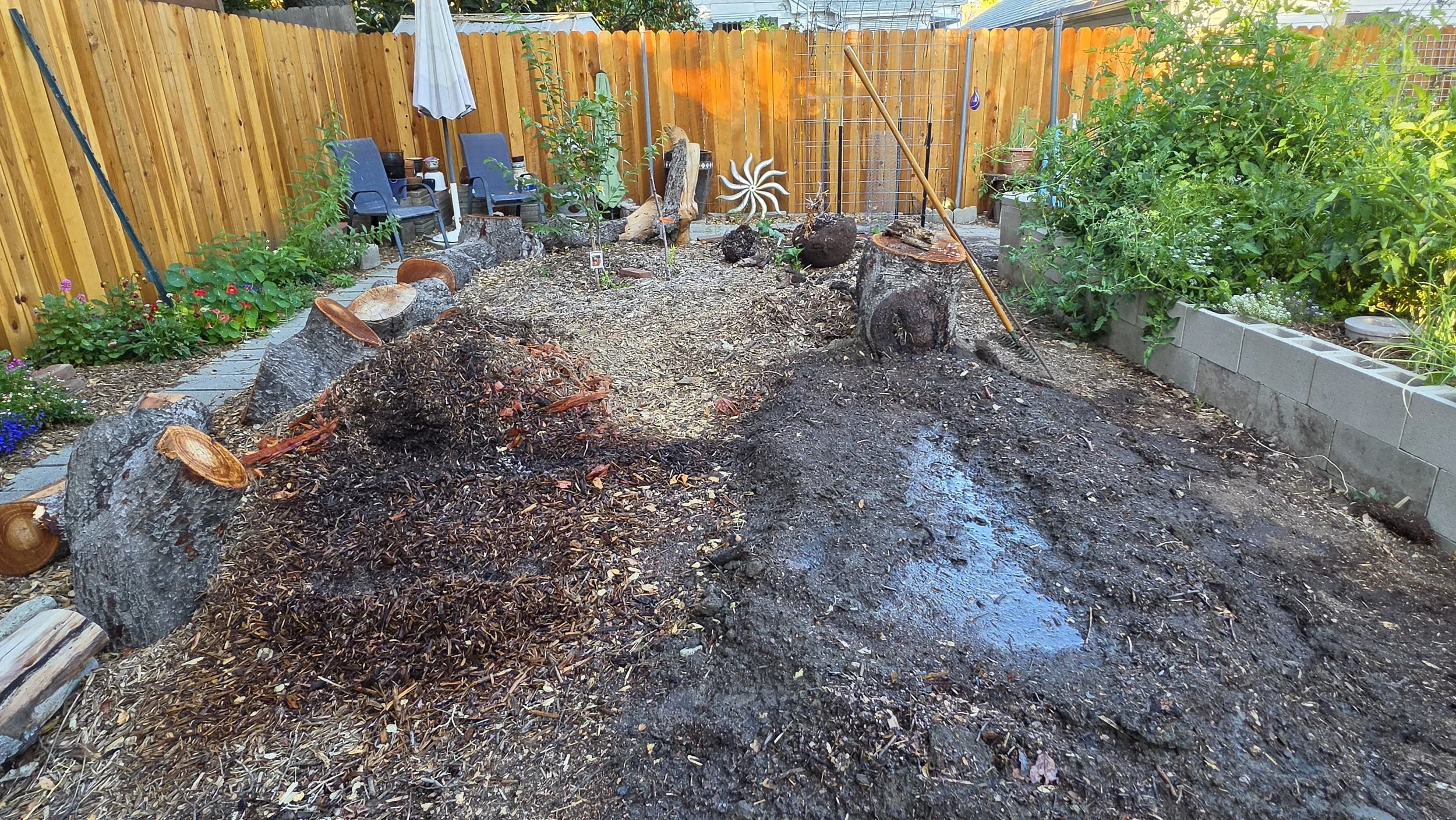
Cover Crops and Guild Planting
This wider shot shows a lot at once. Toward the back are the three fruit trees I planted for my parents — I'm slowly building a small food forest guild around them, and I'll have more to share as those pieces go in. In the foreground are two freshly worked areas. The wet mound on the right is planted with buckwheat and a couple of cowpea varieties: the buckwheat should sprout within days and give me fast cover plus flowers for the beneficial insects, while the cowpeas grow up underneath it. Once they're established, I'll chop the buckwheat down for green manure and let the cowpeas and pigeon peas keep building the soil. The rows on the left are where the second trio of fruit trees will go this fall — in the meantime I've planted gandules (pigeon peas), a big shrubby nitrogen-fixer, to wake up the soil biology before those trees arrive.
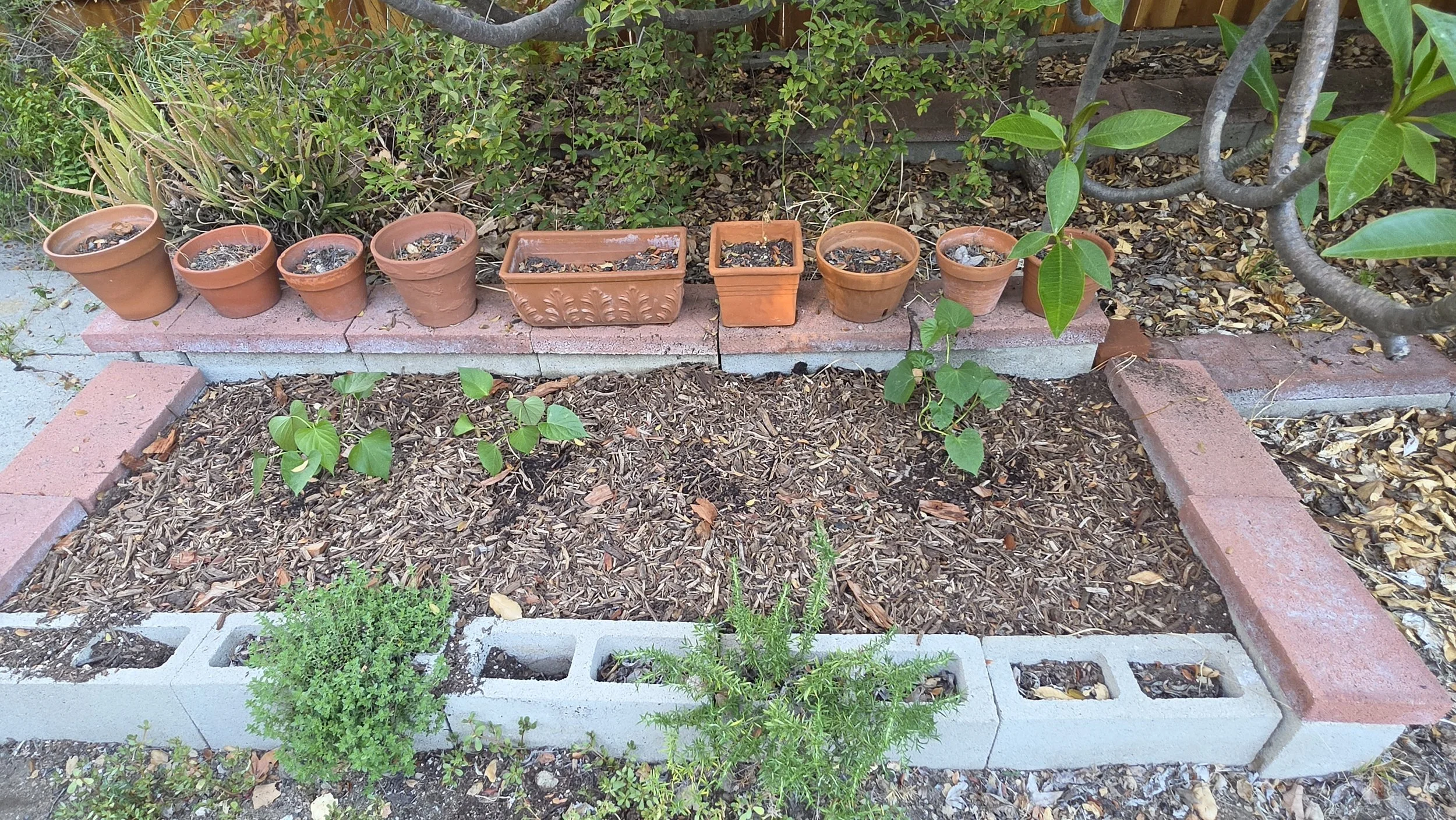
Sweet Potatoes
This little raised bed sits right in front of the jaboticaba — the tropical fruit that grows straight out of the trunk. The thyme and rosemary tucked in here have been going strong for over a year. In the bed itself I've got sweet potatoes (two varieties), though one of the four died — and because I didn't label them, I don't actually know which variety I lost. I've got backups ready, so I'll probably just go ahead and plant one in Sunday or Monday morning. There's a real chance I'll be out there doing exactly that while you're reading this with your coffee.
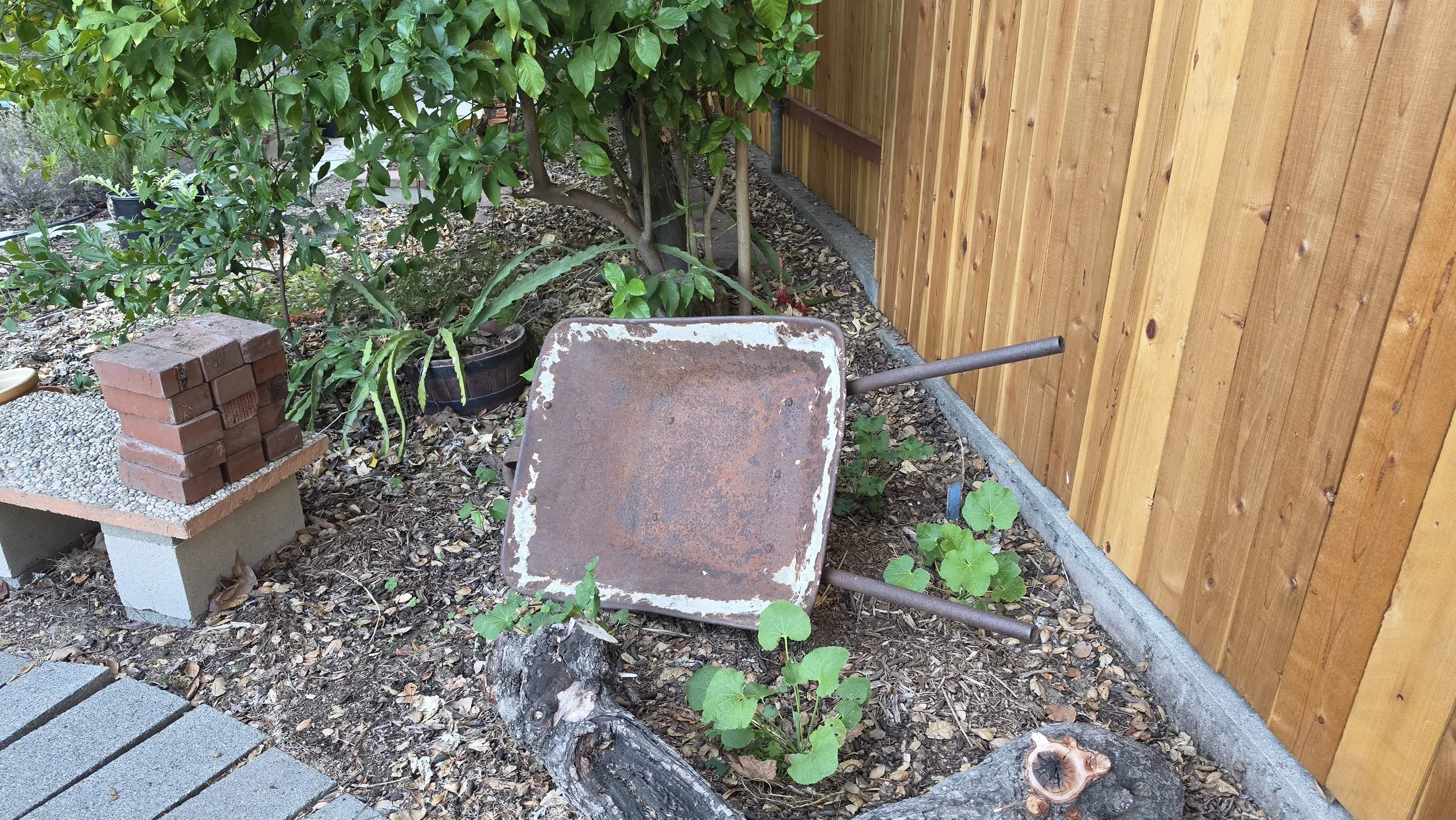
Wheelbarrow and hollyhocks
One of my dad's old wheelbarrows, now retired to decoration duty — I shifted it over next to the lemon tree. Five hollyhocks have circled up around it and are absolutely thriving on a single watering a week, even in what's a fairly shady corner. Down by the wheel is a sweet potato I tucked in not for the tubers but as a living ground cover — weed suppression plus a steady supply of edible greens for the family, in a spot I'd never want to dig up.
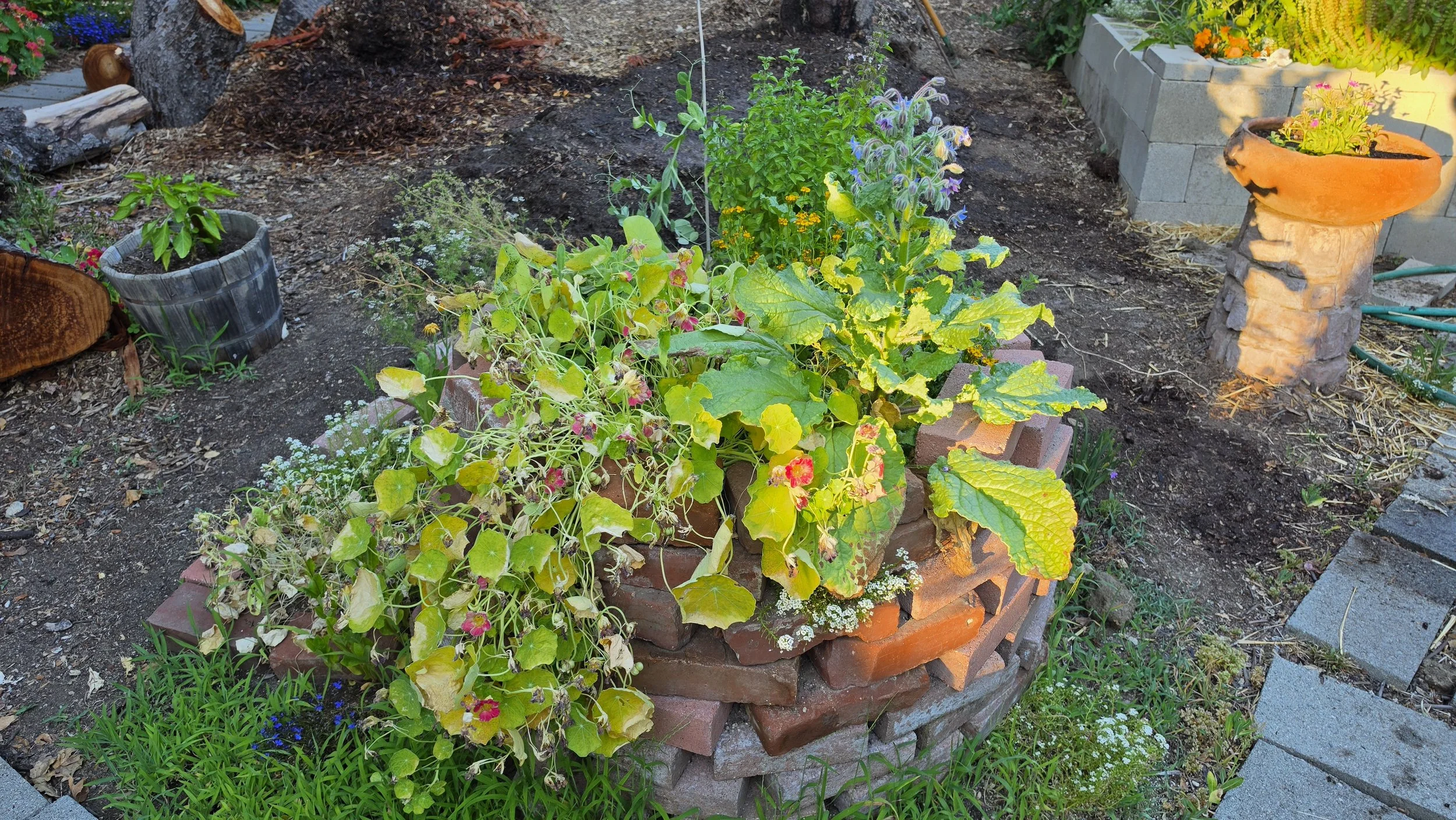
Herb spiral
The herb spiral is having a moment of transition. The nasturtiums draping over the front are well past their prime — the heat and a wave of aphids finally did them in, and they're due to come out. (If you've got a favorite plant for draping over the edge of a spiral, leave me a comment — I'm taking suggestions.) The volunteer borage in the center is blooming beautifully; I'll be eating those flowers and composting the leaves, since borage is a wonderful dynamic accumulator. Underneath all that chaos, the garlic chives, basil, Mexican tarragon, oregano, lemon thyme, and sage are all doing great. The one puzzle is the bottom section, which seems to be struggling — I'm planning to dig in and figure out what's going on down there.
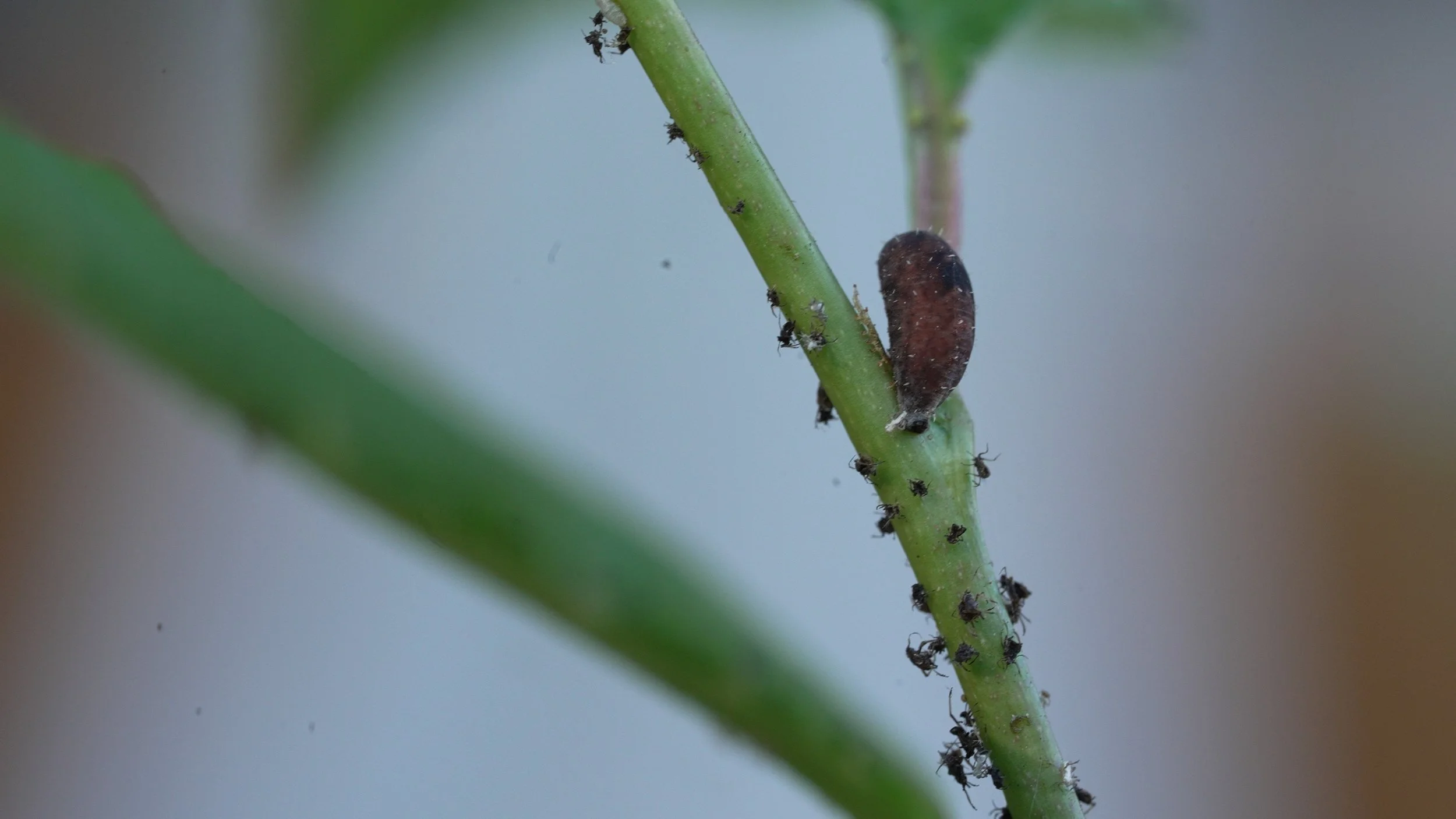
Hoverfly Puparium
And here's the payoff to the story I opened with. Remember those aphids I left alone six weeks ago? I pulled out the macro lens to film some of the insects living back here, and while I was at it I realized every single aphid on that plum tree was dead and desiccated. The culprit is right here in the frame: a hoverfly puparium. A single hoverfly larva ate the entire colony and then pupated right there on the stem. It's been there three or four days now and should open any day. I left it alone, and nature handled the rest — those larvae (aphid lions, as they are known) are quietly keeping aphids, mealybugs, and spider mites in check all over the yard. The whole thing is going into an upcoming video on the insects of this little ecosystem.
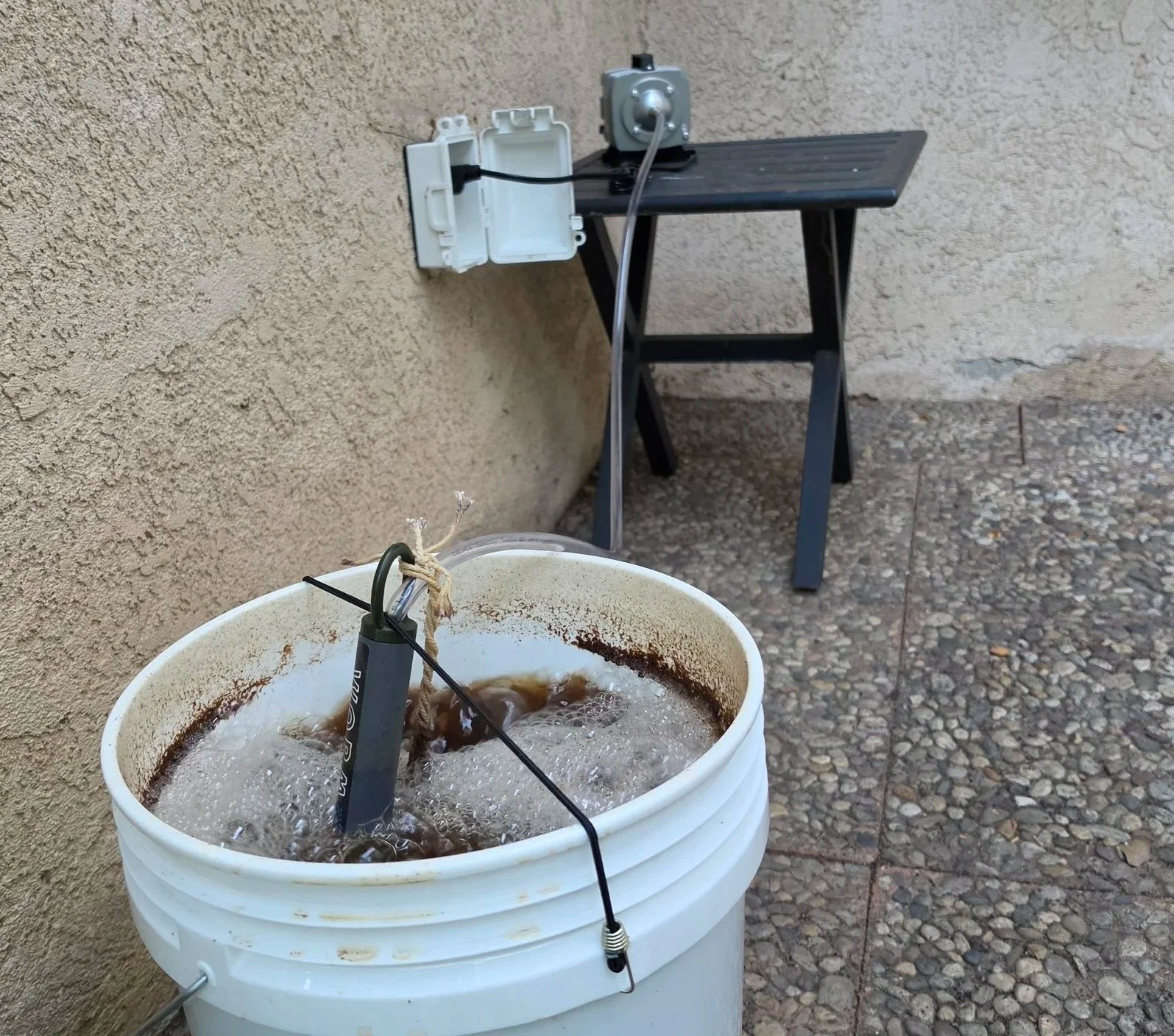
Worm Tea Brewing
Last one: my worm tea is brewing as I write this. By 6 a.m. I'll be up filtering it and pouring it out around the garden — so there's a good chance that, right now, as you read this Sunday morning, I'm out there doing exactly that. This batch has the worm castings plus a quarter cup of unsulfured molasses and close to a cup of mealworm frass, which is a bit of an experiment — I've heard frass can be used something like worm tea, but I don't know anyone who's actually tried it, so we'll see. I'll report back in the coming weeks.
And that brings me to Thursday. Hugelkultur Chapter 2: The Soil Systems drops on YouTube this Thursday, and it's all about how I built the living soil in this bed — the worm bins, the wine cap mushrooms, the way all these organisms start working together, and yes, the full worm tea brew. A quick apology: I'd meant to release it last Friday, but my parents had roof work going on, and recording early in the morning under all that noise just wasn't happening. So I pushed it to this Thursday — I think the extra few days made it better. I don't have the link yet, but it'll be in next week's newsletter, and if you're subscribed on YouTube with notifications on, you'll know the moment it goes live.
One last note: I took far more photos than I could fit here — there is genuinely a ton going on in this yard right now. I can't write it all up, but I'll show you everything in person. My first livestream back will be a full tour of the yard, and it's coming the weekend after this one (I'm giving the time poll a week to settle first). Bring your questions — I'd love to hear them.
Thought of the Week
When to Trust, When to Act
The hoverfly has been on my mind the past few days. Six weeks ago, faced with an aphid infestation, I chose to do nothing — and doing nothing turned out to be exactly right. The system worked. A predator I never released found the aphids on its own, ate every last one, and left behind a little brown puparium as a receipt. If I'd reached for a spray that first day, I'd have killed the aphids — but I'd also have killed the hoverfly larva before it ever arrived.
So much of regenerative gardening is learning to sit on your hands. To trust that the web of life you've spent your time building actually knows what to do, and to get out of its way.
But — and this is the part I don't want to leave out — sometimes doing nothing is the wrong call. That early blight on my Sungolds won't resolve itself. If I ignore it, it spreads, and I lose the plant. That one I have to cut out by hand, again and again.
The real skill, and it's the work of a lifetime to get good at, is telling the two situations apart: knowing when the system has it handled, and knowing when it's quietly asking you for help. I don't have a clean formula for it. Mostly it comes down to paying attention — watching closely enough, and long enough, to tell the difference between a problem that's solving itself and one that's only getting worse. The aphids could wait. The blight can't. Learning which is which might be the most important thing a gardener ever learns.
