Making Space for What Comes Next
Welcome to the Weekly Edition
This week’s newsletter is a bit of a quiet one. It’s break week, so there are no classes - and honestly, the garden is taking a breather too. Between the rain moving in Monday and the temperatures dropping back down after that glorious stretch of warm weather we just had, it feels like a good week to slow down, look around, and think about what comes next.
And that’s exactly what this issue is about.
In For Students, you’ll find the full spring class schedule starting February 23rd, along with everything you need to know to get registered.
In The Garden, I’m taking you on a tour of my parents’ backyard and walking through all the spring planning I’ve been doing out there - plus a quick weather update for anyone still watching their plants nervously after last week’s whiplash.
And in Thought of the Week, I’ve got three quotes that have been rattling around in my head lately, with a few reflections to go along with them.
Let’s get into it.
For Students
No class this week - enjoy the break!
Spring semester kicks off on Monday, February 23rd.
Need to register?
In-person students can simply show up on the first day and register on-site.
For online classes, use the noncredit application at:
👉 mtsac.edu/noncreditappNot sure if you’re already registered for spring?
Email me at bbrown40@mtsac.edu and I’ll confirm for you.
Full addresses and additional class details are available on my classes page:
👉 growingwithprofessorbrown.com/classes
(You’ll also find gardening classes taught by other instructors at Mt. SAC.)
Spring Schedule
Regenerative Gardening
Tuesdays, 10:30 AM – 12:20 PM
Palomares Park, Pomona — CRN 41584
⚠️ Very Low Enrollment
Tuesdays, 1:00 PM – 2:50 PM
La Verne Community Center — CRN 41585
⚠️ Low Enrollment
Wednesdays, 10:00 AM – 11:50 AM
Diamond Bar Center — CRN 41586
✅ Good Standing
Wednesdays, 1:00 PM – 2:50 PM
San Dimas Senior Citizens Center — CRN 41587
✅ Good Standing
Thursdays, 1:00 PM – 2:50 PM
City of Walnut Senior Center — CRN 41590
✅ Good Standing
Fridays, 8:00 AM – 12:05 PM
California Conservation Corps — CRN 44143
🔒 Full
Fridays, 1:00 PM – 2:50 PM (Online)
Zoom — CRN 41612
✅ Good Standing
Fundamentals of Sustainability
Wednesdays, 3:05 PM – 5:10 PM
San Dimas Senior Citizens Center — CRN 41331
⚠️ Very Low Enrollment
Fridays, 3:30 PM – 5:35 PM (Online)
Zoom — CRN 41608
⚠️ Low Enrollment
In the Garden
Winter Whiplash, Part Two
Well, they said the cold was coming - and it came.
After what felt like weeks of genuine springtime weather - we're talking highs in the 80s, flowers blooming, plants pushing out tender new growth like it was April - the temperature is dropping back down this week. If you look at the forecast right now, we're looking at highs in the mid-50s Monday through Wednesday, with lows creeping down toward the mid-40s. And rain. Monday evening through Wednesday morning, give or take.
If your plants got a little overexcited during the warm spell - and honestly, who could blame them - just keep an eye on that tender new growth over the next few days. It probably won't get cold enough to cause serious damage, but it's worth paying attention, especially if you have young citrus or other frost-sensitive plants. A light sheet thrown over them on the coldest nights is all you need.
The silver lining? Rain is always welcome, and cold, cloudy days are actually a great time to slow down, step back, and do something we don't always make time for: plan.
Planning for Spring: A Look at My Parents’ Garden
I’ve been putting in a lot of work at my parents’ garden lately, and this week is going to be a big one. I want to take you through what I’m working with, what the plan is, and how I’m thinking through it all - because honestly, the planning stage is just as important as the planting stage. Maybe more so.
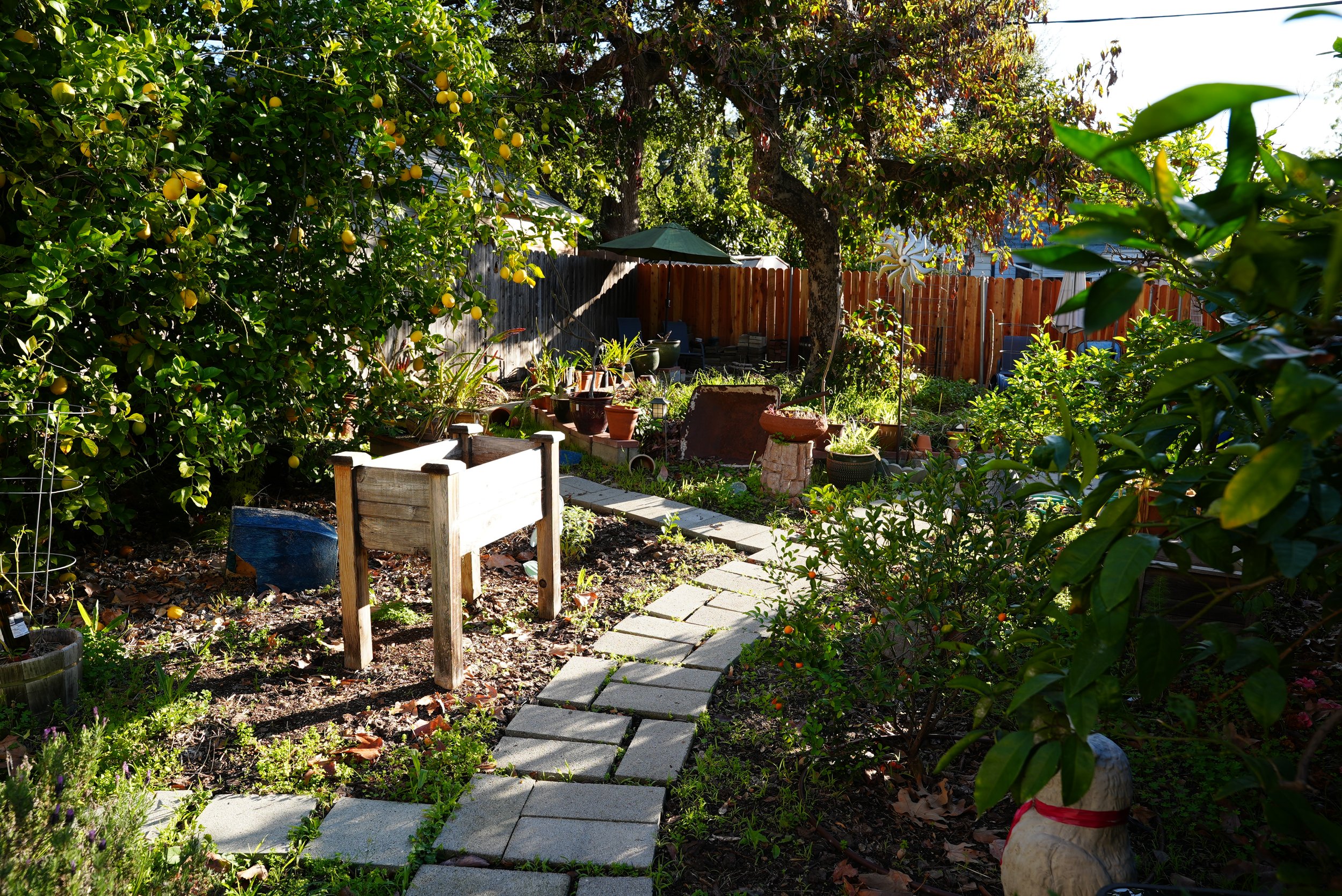
This is the widest shot I have of my parents’ backyard, and it gives you a pretty good sense of what we’re working with. The raised bed in the foreground is actually a rescued piece - a neighbor put it out on the curb, and while some of the wood is getting a little crumbly, it still has plenty of life left in it. I brought it over, cleaned it up, and it’s going to get a new purpose.
I’m planning to fill it with fresh soil and plant it with shallow-rooted edibles - probably lettuce or herbs. Since it sits up off the ground, I also want to plant an herb or two around and underneath it so that every inch of space is doing something.
Just behind the raised bed is a compact white sage I recently planted. I made sure it gets plenty of sun and that it’s far enough from everything else that we don’t have to worry about water overlap - white sage really doesn’t want to be sitting next to plants that need regular irrigation.
And straight ahead in the photo? That’s the avocado tree. But we’ll get to that in a minute.
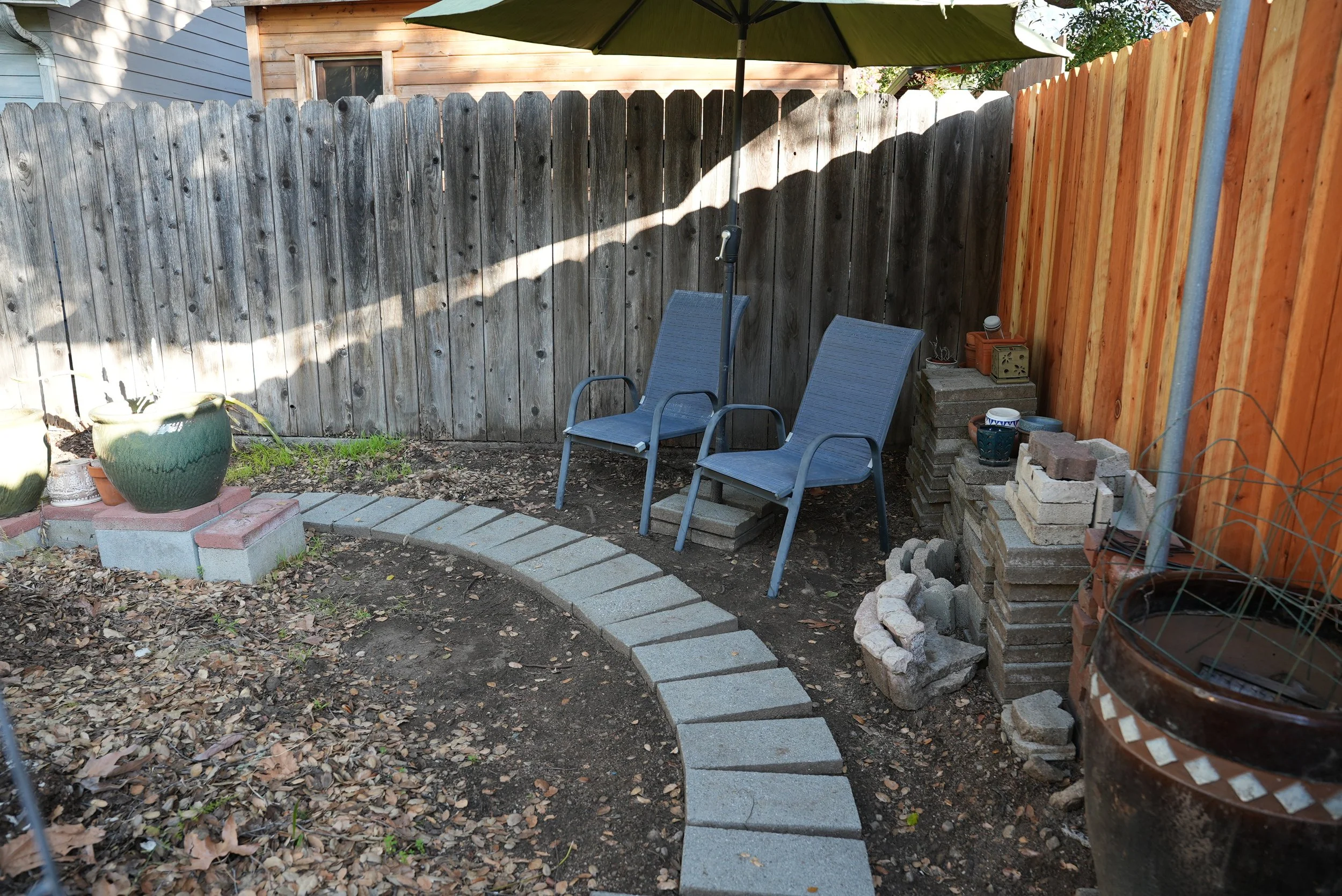
This is the northeast corner of the yard, and it's already been through some changes. Up until just recently, this was a square pad of concrete blocks - a flat sitting area with no gaps, no breathing room for the soil underneath. My mom took those blocks out over the last few days and rearranged them into this curving path, which is going to open up a lot of possibilities as we move forward.
This actually connects to a bigger story about the avocado tree. That tree started declining around the same time the family laid down blocks throughout this area of the yard. Before the blocks went in, fallen avocado leaves blanketed the ground beneath the tree, keeping the soil healthy and the roots happy. The blocks changed all of that - combined with years of drought and water that was high in salts, the tree never really recovered. It's a good reminder of how much the soil environment matters, even for a big established tree.
Going forward, while there will still be a block walking path through this area, we've reduced the coverage and left small gaps between the blocks so that water and air can actually get into the soil. That might seem like a small detail, but it makes a real difference for the health of whatever we plant here.
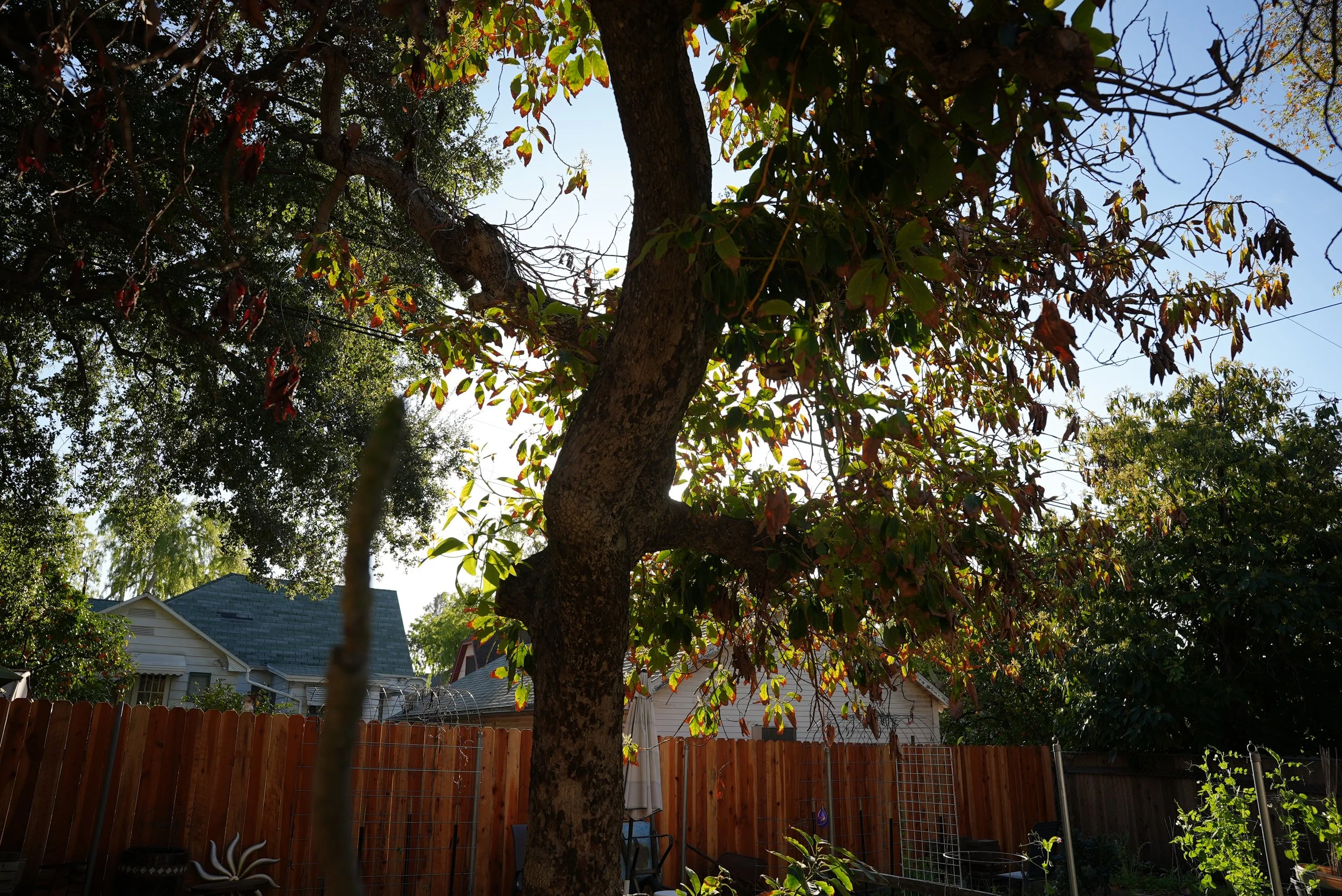
Here's a closer look at the avocado tree, and I won't sugarcoat it - it's not doing well. That branch heading off to the left is completely dead. The canopy, which used to spread over 25 feet and produce hundreds - maybe over a thousand - avocados a year, has been dying back slowly for well over a decade now. In recent years it's been giving us maybe four or five avocados a year, if we're lucky.
I grew up with this tree. I remember when we had so many avocados we were giving them away in bags to anyone who would take them. Neighbors, friends, anyone. There was always too much. That tree fed a lot of people over the years.
But my father has finally agreed that it's time to let it go, and honestly, I think he's right. Taking it out is going to open up a lot of space and a lot of possibilities. In the coming weeks, we'll be removing the tree and planting four or five new small fruit trees along the north side of the yard. We'll also be putting in a new raised bed between the walking path and where the avocado currently stands. Saying goodbye to an old tree is never easy - but sometimes it's the right thing to do.
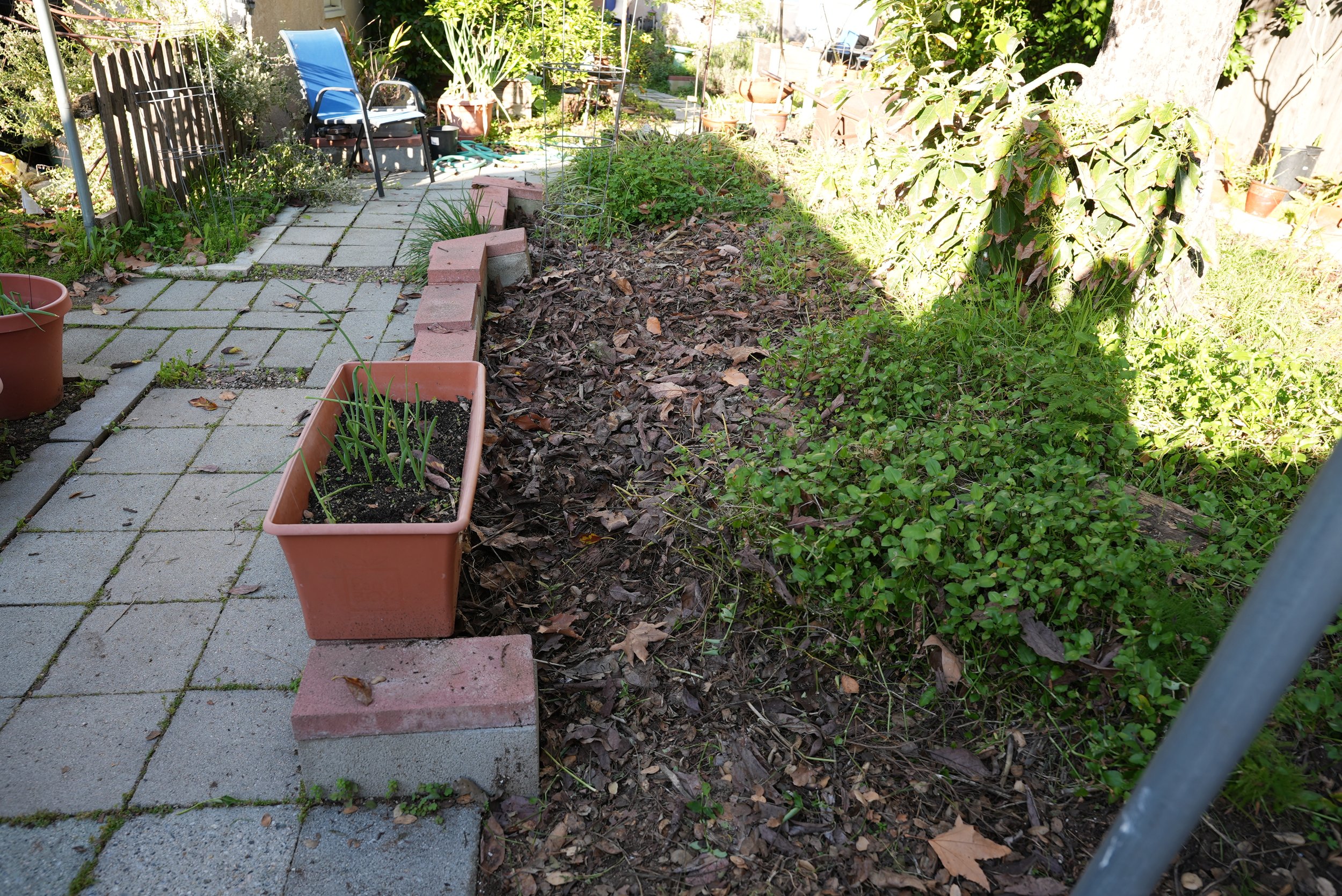
This is the area where that new raised bed is going, running right along the pathway. It might not look like much right now - there are leaves piled up, a few volunteer plants, and not much else. But this is actually one of the best spots in the entire yard for vegetables.
How do I know that? I've been using an app called SunSeeker, which uses your phone's camera and GPS to map out exactly where the sun will be throughout the day and across different seasons. It takes the guesswork out of sun placement completely. After checking this spot, I can tell you it's going to see between 8 and 10 hours of direct sunlight throughout the warm growing season. For vegetables - especially tomatoes - that's ideal.
Once the bed is built and the soil is in, I'll be using another app called Planter to figure out exactly what to plant and when. It's a garden planning tool that tracks spacing, companion planting, and planting schedules based on your location. I've been using it to map out what's going in this bed, and I'll talk more about that in a future newsletter once we get to the planting stage.
I usually have a handful of projects in motion at any given time, and I love sharing the process - even when things are still in progress. Between the newsletter, filming and editing, planning for classes, teaching, and projects like this at home, time is always a little tight. I’m prone to taking on more than I probably should because I genuinely enjoy this work, but I try to move things forward thoughtfully and sustainably. Some ideas take time to fully unfold - and I'm looking forward to making good progress on these garden projects during my short break.
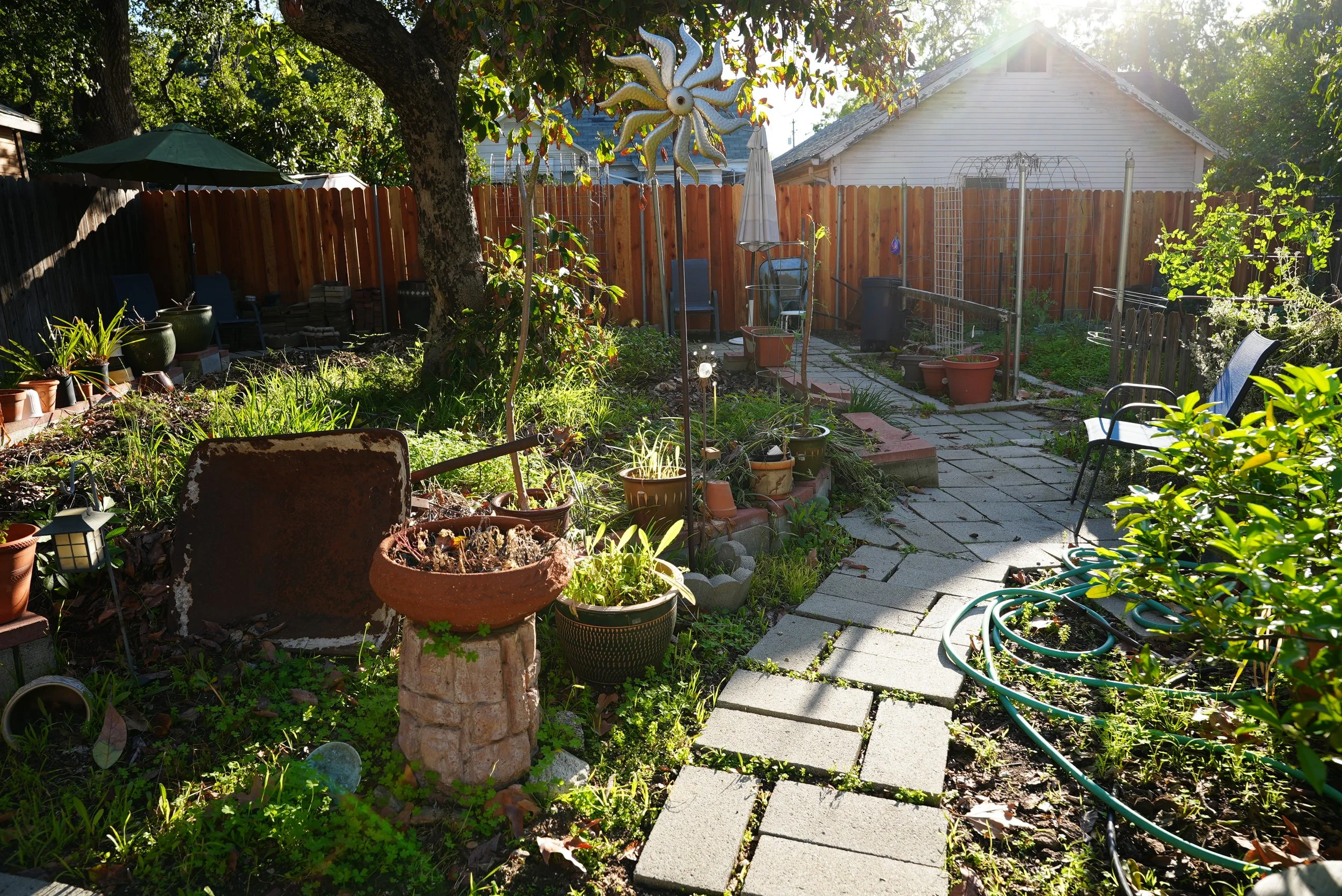
Here's another angle of the same area, and you can see the pile of leaves that's currently sitting right where the raised bed is going to go. This week, I'll be raking those back, clearing out whatever's growing in the space, leveling the ground, and laying the blocks that will form the bed frame.
For the soil, I'll be bringing in fresh raised bed mix from O.F. Wolfinbarger's in Chino - if you haven't used their soil before, it's excellent. I'll also be mixing in some worm castings for a little extra biological activity, and I'll add a starter fertilizer when we actually plant up the bed. The old soil from the existing raised bed - which hasn't been amended in years - will get spread around the yard rather than thrown out. There's still life in it, it just needs some space to breathe.
My goal is to have this bed built and ready to go by the end of this week. If that happens, I'm thinking the first week of March for planting - which lines up well with tomato transplant timing for our area.
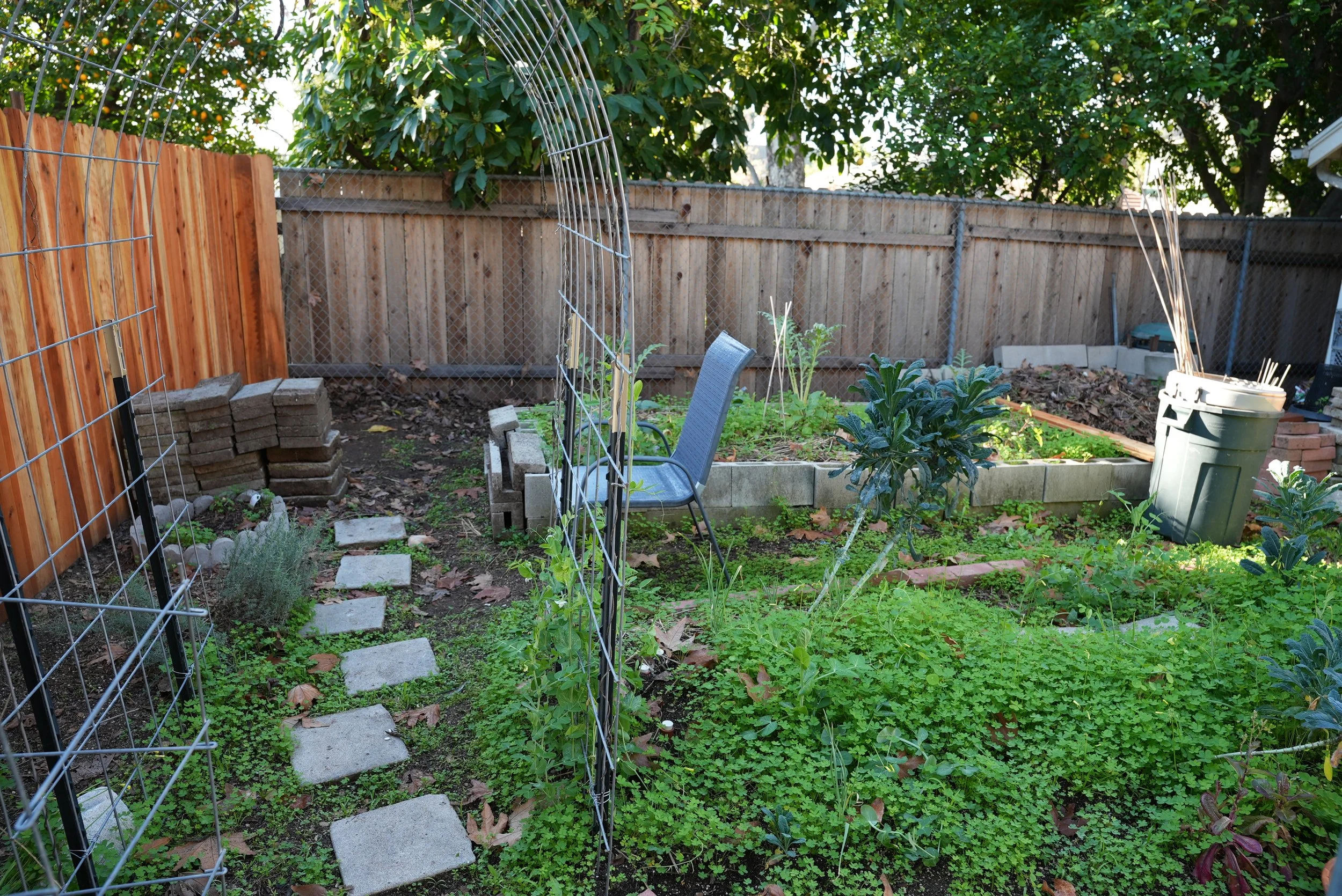
This last shot is taken from the back of the yard, looking toward the space behind the garage. This used to be the main vegetable garden - the heart of the whole operation. But in years ago, the neighbors planted some large trees right up against the fence, and now nearly half of this garden is in full shade year-round. You just can't grow vegetables in those conditions.
So we're reimagining this space entirely. The old raised bed you can see in the back is coming out - it simply doesn't get enough light anymore. The blocks will be repurposed over in the raised bed area we just talked about. In its place, we're going to create a small patio sitting area - a few chairs, maybe a table - tucked into what is now a surprisingly shady, cool corner of the yard. With how shaded this area stays even in summer, we probably won't even need an umbrella. We'll fill it with potted shade-loving plants and make it into a space worth sitting in.
And that far back corner to the left? That's going to be the new compost pile. Bigger than what they've had before, tucked out of the way.
It's a lot of change happening at once, and honestly it's exciting. The garden my parents have had for decades is getting a big refresh. Some of it is letting go of things that aren't working anymore - the avocado tree, the shaded vegetable beds - and some of it is building something new in their place. That old avocado tree gave a lot to our family over the years. The least we can do is make sure the space it leaves behind is put to good use.
Stay tuned for part two next week, where I'll show you what actually got done.
Thought of the Week
There's something about this time of year - the season hasn't quite committed yet, the garden is in between, and a lot of us are in that same in-between place ourselves. Planning, preparing, hoping. It's a good time to slow down for a second and think about the bigger picture.
“It is never too late to be what you might have been.”
We all have things we've been meaning to do, gardens we've been meaning to plant, changes we've been meaning to make. Sometimes we may feel like we've waited to long and we missed out chance - but that isn't the case. The calendar doesn't disqualify you from what you want to do. Whenever you decide to start is exactly the right time to start. Really, right now is the only time you can ever start something. You just need to decide that now is the time.
“Always do your best. What you plant now, you will harvest later.”
So instead of giving up, do your best. Do the work, tend the garden, trust the process. What you plant now, in this moment, will be harvested later. But you won't harvest later if you don't start.
“In three words I can sum up everything I’ve learned about life: It goes on.”
And that it does. Through the weather whiplash, through the setbacks, through the seasons that don't go as planned. It goes on - and so do we.
So keep planting. The harvest will come.
