Before and After the Shade
Welcome to week four!
This week's newsletter is a full one. We've got a livestream announcement, updates for all classes, a new YouTube video on California native plants, a look at what's been happening in the garden, some thoughts on upcycling, and a personal reflection to close things out. Grab a cup of something warm and settle in — there's a lot of good stuff here.
Livestream Announcement
Mark your calendars: I'll be hosting a live stream on Monday, March 23rd at 5 PM (barring any unforeseen circumstances). I'll share the link in next week's newsletter, but I wanted to give you as much lead time as possible.
Here's the plan: during the first half of the stream, I'll be planting up the new raised bed — it's going to be primarily a tomato bed, but built as a true polyculture full of beneficial companion plants. I'll have my screen nearby the whole time so you can ask me questions and chat with me while I work.
During the second half, I'll be shifting over to a special project I've been working on — there's a photo of it in the Living Sustainably section below. (Can you guess what I'm making?) While I work on that, consider it a bonus, unofficial office hour — ask me anything garden-related and I'll do my best to answer while my hands are busy.
Hope to see you there!
For Students
We're heading into Week 4 (March 16–20). Here's what's happening in each class this week.
Regenerative Gardening — Trees & Shrubs
This week we're diving into one of my favorite topics: trees and shrubs. We'll explore why trees are so valuable and important in our landscapes — not just aesthetically, but ecologically. We'll look at what distinguishes trees and shrubs from herbaceous plants, get into some tree biology, and cover tree maintenance and care. We'll also go over how to correctly prune a branch (technique really does make a difference here), and we'll spend time on one of the most important principles in horticulture: planting the right tree in the right place.
Our group discussion this week is one I'm really looking forward to: Planting a tree is a long-term relationship — sometimes longer than our own lives. What responsibility comes with planting something that will outlive you? Come ready to think big.
California Conservation Corps — Big Planting Day
For those of you in the Friday CCC class: this is the week we've been building toward.
A quick note for anyone who missed last Friday — we weren't able to do our big planting as planned. The purchase order didn't come through until Thursday, which didn't leave enough time to prepare properly. On top of that, with a significant heat wave forecast for this coming week, I made the call to wait one more week before putting plants in the ground. Last Friday we continued cleanup work in the garden and spent time on hands-on technique — how to use ollas, how to handle different garden tools, and why those details matter.
Speaking of tools — one of our tools was broken during the last class. Nobody is in trouble, and thankfully nobody was hurt. But I want to take a moment to remind everyone: please be mindful of how you're using the tools. Make sure each tool is being used for its intended purpose, and if you're ever unsure, just ask.
This Friday, we're going for it. We'll be planting up all of our garden sections, and installing ollas. I've also purchased materials to build some protective enclosures — small circular chicken wire cages to place around individual plants to help keep the critters at bay. (Some materials I'd originally planned to use weren't available, so we're adapting — as gardeners always do.)
One very important reminder: after the plants go in, they need attention during the following week. Any plant without an olla will need to be hand-watered. And even plants that do have an olla nearby will still need some supplemental water for the first week or two — the roots won't have grown toward the olla yet. Establishment takes time, and those first couple of weeks are critical. Please keep an eye on things.
Fundamentals of Sustainability — Regeneration
This week in Fundamentals of Sustainability we're exploring the concept of regeneration — and how it differs from sustainability. We'll look at what it actually means to move beyond simply "doing less harm" and toward actively restoring and revitalizing living systems.
We'll also be taking a close look at the Lyle Center for Regenerative Studies at Cal Poly Pomona — one of the most visionary educational facilities in the country, and a place I have a deep personal connection to. I'll share a bit about my time studying there and what I believe regenerative thinking has to offer us right now. I'm also planning to share some news about a new course I'll be teaching at the Lyle Center this fall — more on that as the week unfolds.
Field Trip Reminder — 3 Weeks Away
Just a heads up: our field trip is coming up in Week 7, which is just three weeks away! Next week I'll be making a full announcement about which group goes to which location, and I'll also be bringing the field trip paperwork for everyone to fill out. That will all happen during class next week — not this week — so stay tuned.
New YouTube Video — 14 California Native Plants
I have a new video out this week! Despite a loud, unscripted "guest appearance" by our local neighborhood parrots in the intro, I managed to showcase 14 California native plants at the California Conservation Corps garden — spending 15–30 seconds per plant with photos and a few interesting facts about each one. It's a quick, enjoyable watch whether you're brand new to California native plants or just want a refresher on some familiar faces.
I'm sure many of you have already seen it, but if you haven't had a chance yet, feel free to check it out below!
In The Garden
It has been a big week at my parents' backyard — one of those weeks where the space looks genuinely different at the end than it did at the beginning. The avocado tree came down. I know it was the right decision, but I won't pretend it was easy. That tree was a presence. More on that in a moment.
While all of that was happening, we also built a new compost bin in the back corner of the yard, and we've begun planning for the new fruit trees that will eventually go in along the north side. A lot of change, all at once. Let's walk through it.
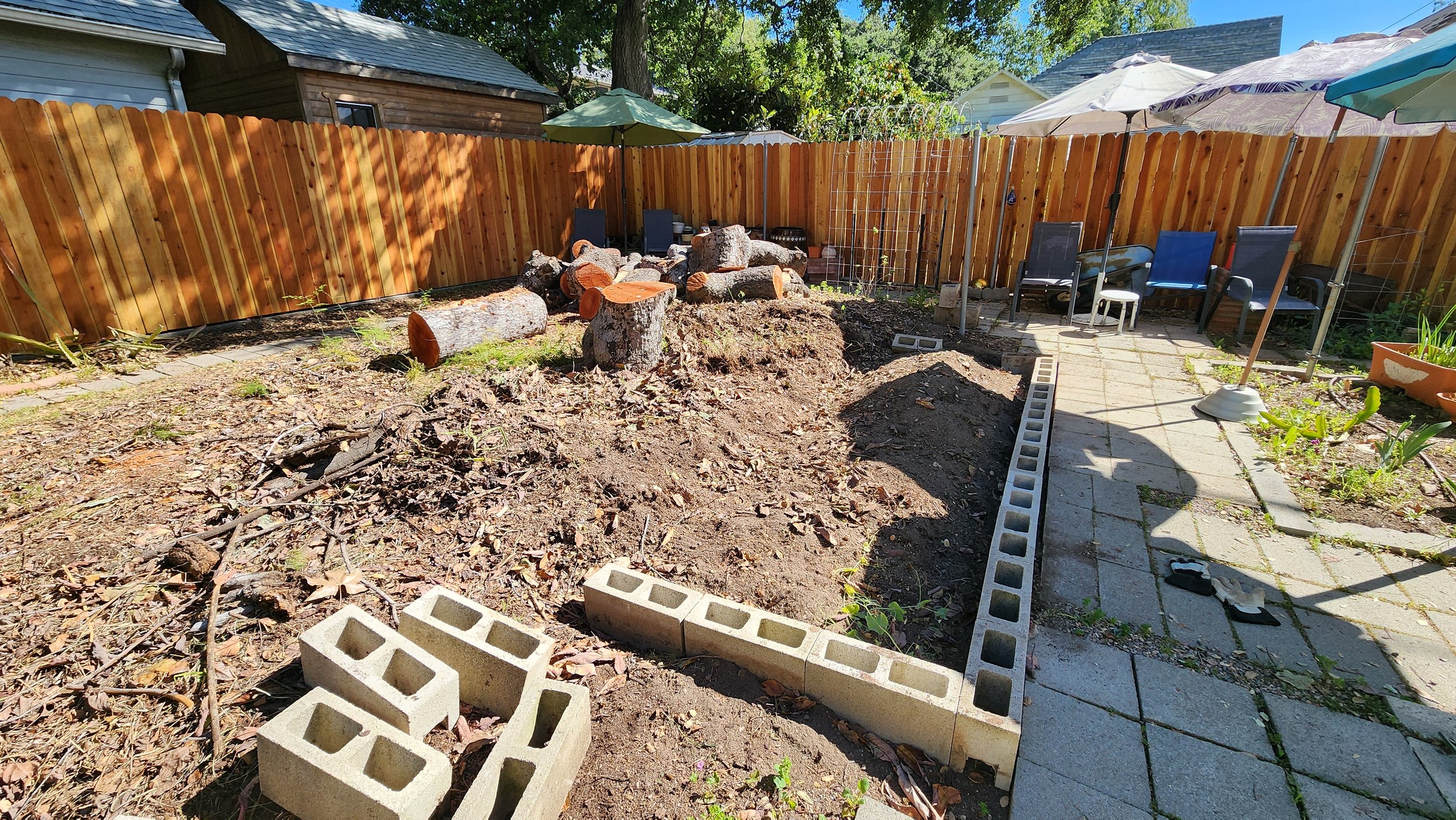
The Raised Bed — Saturday Morning
This is what the raised bed looked like when I started working on it Saturday morning. A good portion of the south side had to be completely redone — I had figured it would be out of the way when the arborists came, but they ended up moving the blocks to give themselves room to work. So, back to square one on that section.
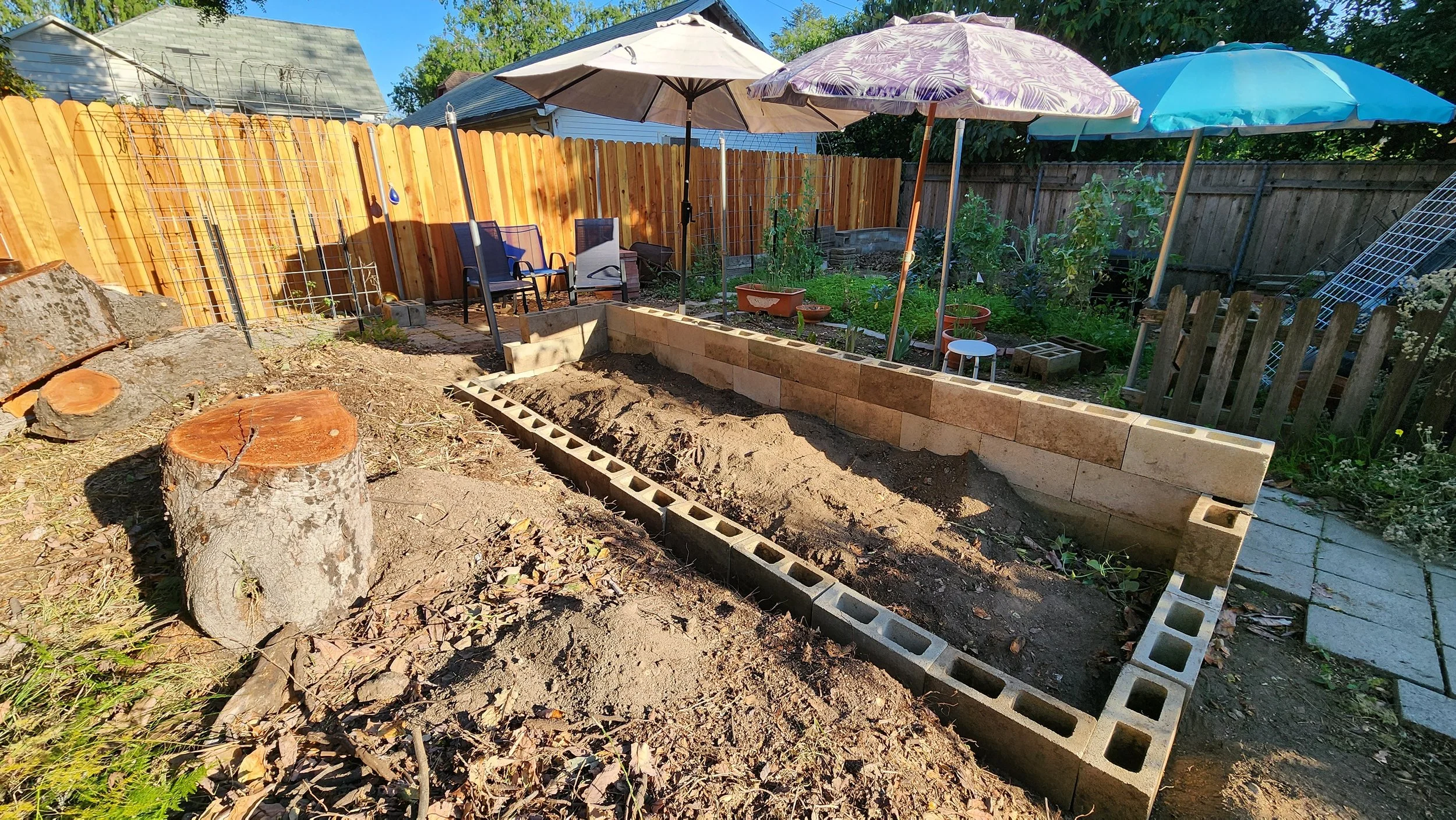
The Raised Bed — Saturday Late Afternoon
As you can see, the south side is now stacked to its full height of three blocks, but I still need to finish leveling and completing the north side. I'm planning to wrap that up tomorrow morning — it shouldn't take long. I had originally hoped to plant this weekend, but with several days of high-90s temperatures forecast for the coming week — quite a bit higher than normal for mid-March — I've decided to wait. I'll use this week to work on filling the bed and getting the irrigation prepped, and then we plant next weekend.
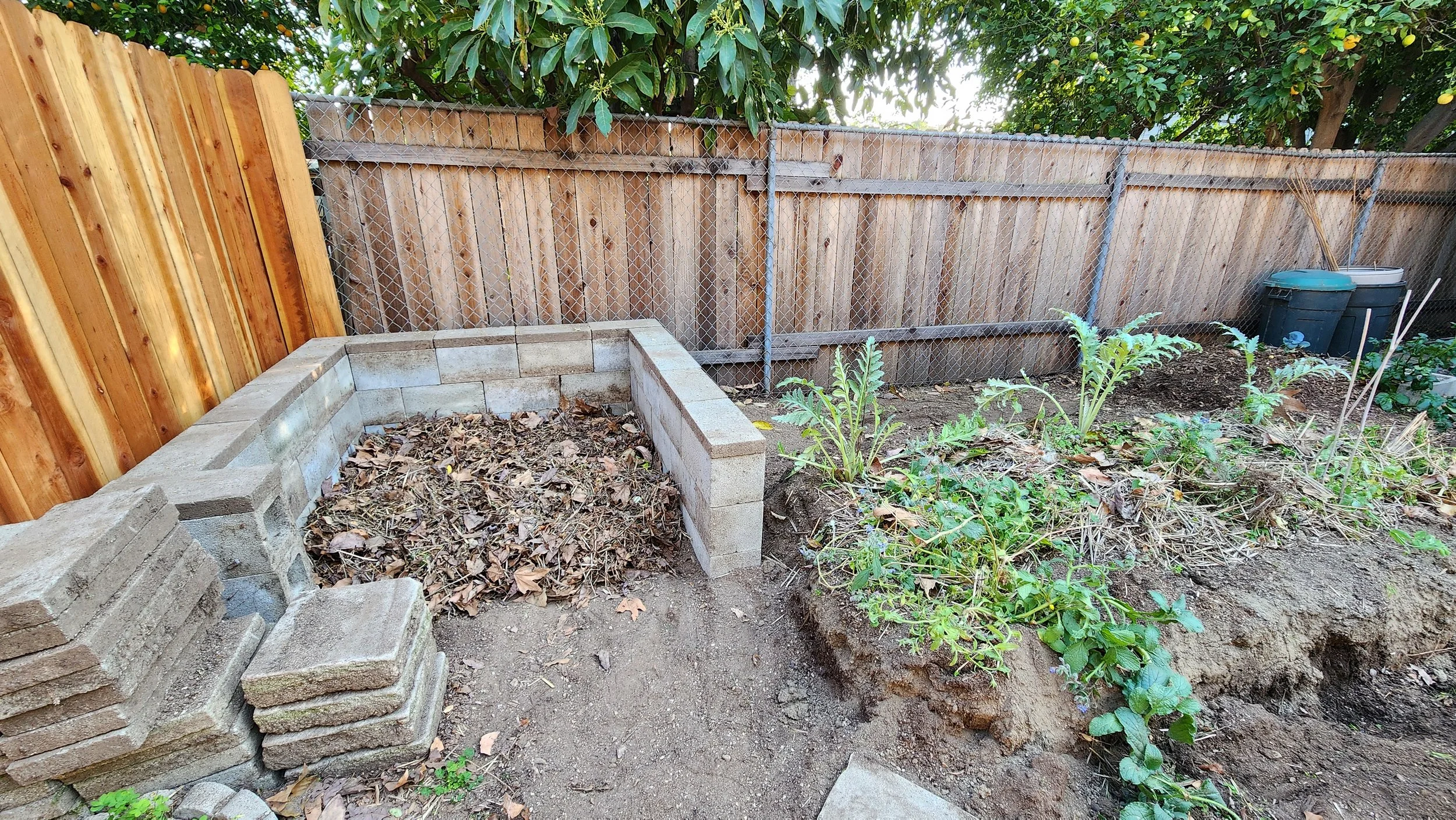
The New Compost Bin
Over the last week, we built a new compost bin in the southeast corner of the yard, behind my parents' garage. You can see where the old bin used to be on the right side of the photo — it was never in a great spot, and it had been built somewhat haphazardly over the years. The new bin is properly leveled, wider, and taller. It's going to be a great setup.
And speaking of compost — keep an eye out for my next YouTube video! It's going to be my first intro to composting video. I'll be kicking off the new pile on camera and walking through the basics of how composting works. Expect to see that in about two weeks!
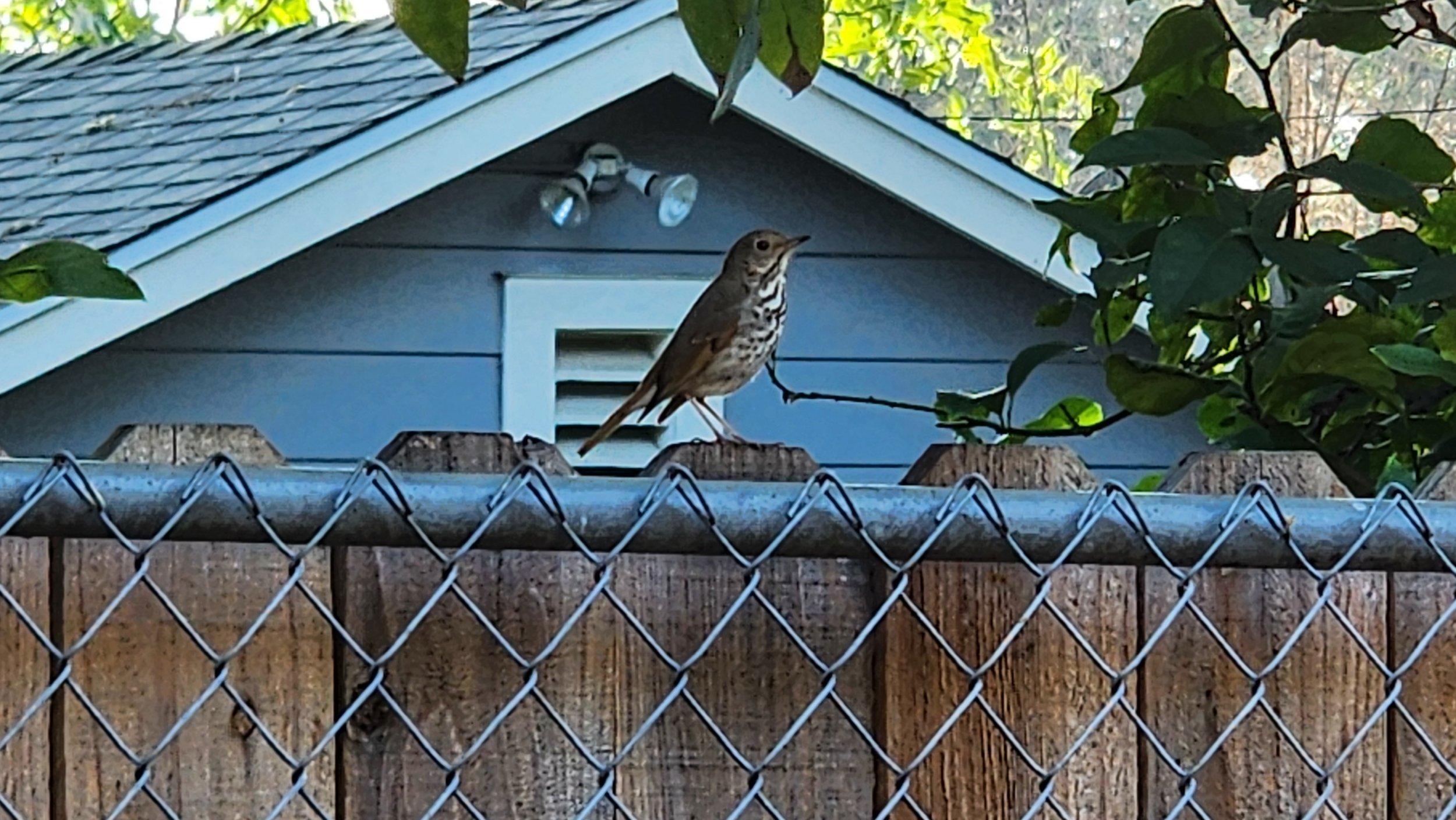
A Visitor on the Fence
With all of the activity in the garden this week — moving leaf piles, resetting raised beds, bringing down the tree — the local birds and lizards have been absolutely fascinated. They must be loving all of the small critters that get exposed every time we disturb the ground. I don't love disrupting the habitat, even temporarily. But I know that what we're building here is going to be more productive, and will ultimately provide better habitat for all the creatures that share this space with us. In the meantime, the fence apparently makes an excellent spot to watch the chaos unfold.
Living Sustainably — Upcycling
You've probably heard the word upcycling before, but it's worth taking a moment to unpack what it actually means.
Upcycling is the practice of taking something that would otherwise be discarded or considered waste and transforming it into something of equal or greater value. It goes a step beyond recycling, which typically breaks materials down before reusing them. Upcycling works with what's already there — the shape, the material, the history — and finds the potential that's already inside it.
Two books worth knowing on this topic: The Upcycle: Beyond Sustainability — Designing for Abundance by William McDonough and Michael Braungart takes a big-picture, design-philosophy approach, asking what it would look like if everything we made was intended to become something else when we were done with it. On the more hands-on end, Danny Seo's Upcycling: Create Beautiful Things with the Stuff You Already Have is an accessible and practical companion. Together they cover the full range — from the visionary to the everyday. (I'll be adding these and other favorites to my recommendations page soon — stay tuned!)
What Do You Do With a 100-Year-Old Avocado Tree?
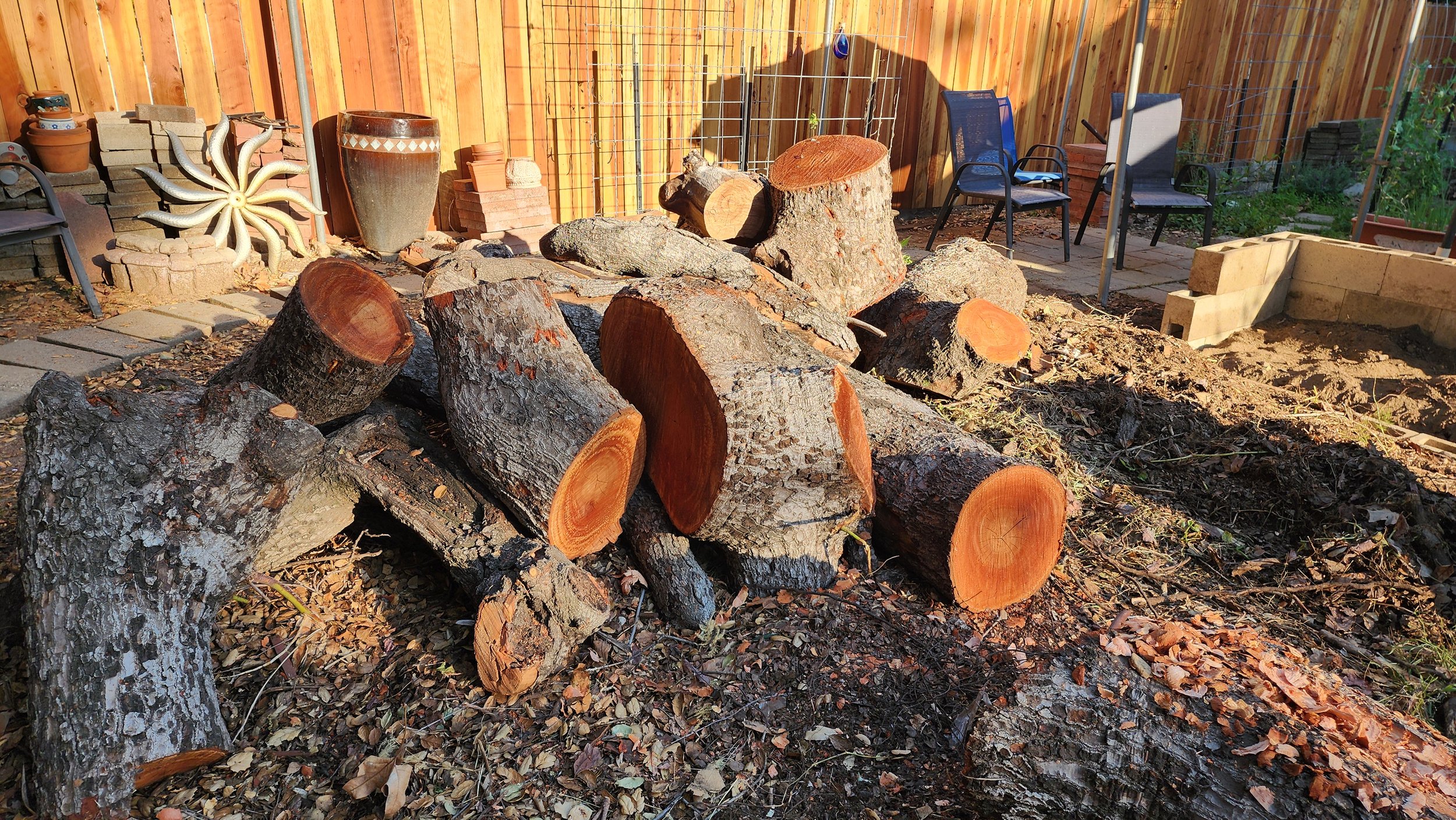
The Wood Pile
As you can see, we kept just about all of the usable wood from the tree — and honestly, even some pieces that aren't particularly usable (I'll find something, I always do). Every single piece will be repurposed in some way. Some will be turned into something functional or beautiful. Others will simply be left to become what's known as a nurse log — a decomposing piece of wood that provides shelter, moisture, and nutrients for insects, fungi, and other beneficial organisms in the garden. Nothing goes to waste. A tree that shaded this yard for over a century is going to keep giving.
I also want to mention — a few of my sisters have asked for pieces of this tree as well, so I'll be making things for them out of the wood over the coming weeks. I'll share those projects here as they take shape.
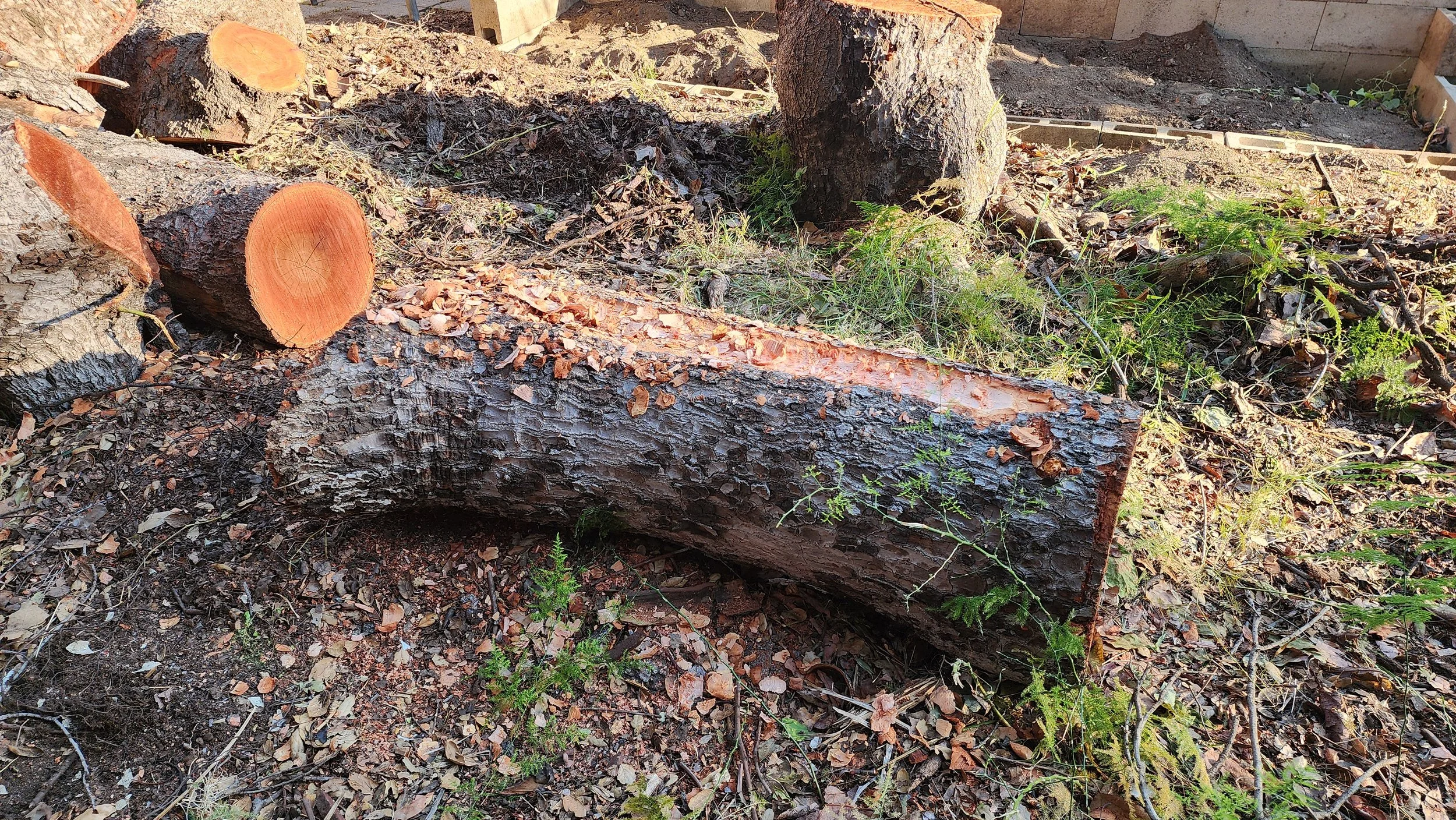
Work In Progress?
And I've already started. As you can see, I've begun working on one of the larger sections of the trunk. Can you guess what I'm making? If you join me on my livestream on Monday, March 23rd at 5 PM, you'll get to watch this project come to life — and hear a little more of the story behind it.
Thought of the Week — Before and After the Shade
When I was small, my parents had a swing set and monkey bars beneath that avocado tree. I spent years playing in the cool of the shade it made, and I can't tell you how many times I lay there looking up through the canopy, watching the light move through the leaves in the breeze. I always thought it was so beautiful.
That tree was probably planted right around the time the house was built — which means it was over a hundred years old. We don't know exactly when, but that's our best understanding. A hundred years of shade. A hundred years of roots. A hundred years of avocados, until it couldn't manage that anymore.
The decline started, as best I can tell, around 2012 — during the worst of California's drought years. My family had laid bricks beneath the tree just before that, which I'm sure made things worse. Not enough water reaching the roots, salts building up in the soil, whole sections of the yard slowly closing off to it. Over the course of ten or fifteen years, the tree died back — a little more each year. For most of that time, we were lucky to get one or two avocados. It tried, every year. This past spring it pushed out new leaves, produced flowers, made its best effort. But it was fading. It was time.
My dad was the one who had to make the final call. I'd been bringing it up for years, gently, knowing it needed to come down. This year, he finally agreed. That matters to me — it was his decision to make, and he made it. It wasn't easy for either of us.
There's something that grief does, when we let it. It reveals the exact shape of what we loved. You can't feel the specific weight of losing something unless you loved it specifically — and so the sadness, as hard as it is, is really just a receipt for the relationship. I don't think grief is a problem to be solved. It's information. It tells you what mattered.
My effort to turn this tree into something that can stay in the garden — something useful, something beautiful, something that can be held — is my way of saying thank you. To the tree. To the years beneath it. To everything it quietly gave without ever being asked.
And now we're planning to plant new fruit trees along the north side of the yard. Trees that may still be standing on this property long after all of us are gone. That's a strange and humbling thing to sit with. It's the same question I'll be asking my students in Regenerative Gardening this week:
What responsibility comes with planting something that will outlive you?
I don't have a clean answer. But I think the act of planting — of choosing to begin something you may never see finished — is one of the most quietly hopeful things a person can do.
This is difficult. But this is the nature of life. Sometimes we are there at the end. Sometimes we are there at the beginning. And sometimes, if we're paying attention, we get to be both — and we understand, finally, that they were never really separate.
