Assume It's a Good Guy
Good morning, friends,
This week, we're talking about the critters in our gardens that are working for us — the beneficial insects (and one arachnid) that quietly keep things in balance. It's an evergreen topic, and one I think every gardener benefits from revisiting.
Join me Monday evening for the Garden Hangout (formerly the Monday Garden Office Hour — same livestream, new name, as I mentioned last week). We'll be live at https://youtube.com/live/_aoXhl53iwk.
Grab a cup of coffee or tea and lets get into it!
For Students
Regenerative Gardening
Next week we'll wrap up our IPM unit with Integrated Pest Management Part 2 — a hands-on practice day. I'll be bringing packets to class with examples of different problems you might encounter in the garden. We'll break into small groups, and each group will work through identifying what's going on in their packet. This is one of my favorite kinds of class — less lecture, more doing — so come ready to work your brain!
Fundamentals of Sustainability
Next week we begin Building Sustainable Communities Part 1. We'll explore the Three P's — People, Planet, Profit — and the role values play in shaping sustainable communities. Expect a guided discussion where we'll think through community strengths and weaknesses, brainstorm the sustainability challenges we see locally, and identify the issues that feel most pressing.
By the end of class, we'll choose a specific challenge to tackle together in small groups during Part 2. Come ready to share what you've noticed in your own community.
Videos from This Week's Classes
Regenerative Gardening — Integrated Pest Management
What is Integrated Pest Management (IPM) and How To Use It In Your Garden
How to Identify Insect Pests in Your Vegetable Garden - CSI Garden Pests
Inspiring Woman Grows a Huge Amount of Food in Her City Permaculture Garden
Fundamentals of Sustainability — Environmental Ethics & EcoJustice
Community News
I'll be at the LA County Fair on Sunday, May 24th, tabling in the farm area for my nonprofit. If you're at the fair that day, come find me — I'd love to say hello. Look for the farm area and you'll find us there.
In the Garden
Your Garden's Allies: Beneficial Insects
Here's something worth sitting with: most of the insects in your garden aren't pests. The vast majority are either neutral or actively helping you. They're pollinating, decomposing, hunting other insects, and quietly keeping everything in balance while we go about our day.
When we reach for a spray bottle the moment we see something with too many legs, we don't just kill the so-called "bad guys" — we wipe out the allies that were already handling the problem for us. A healthy garden is a garden full of relationships. The more we learn to recognize the helpers, the less we feel like we need to intervene.
Let's start with the ones you're most likely to recognize — and the ones you can actually buy and release into your garden.
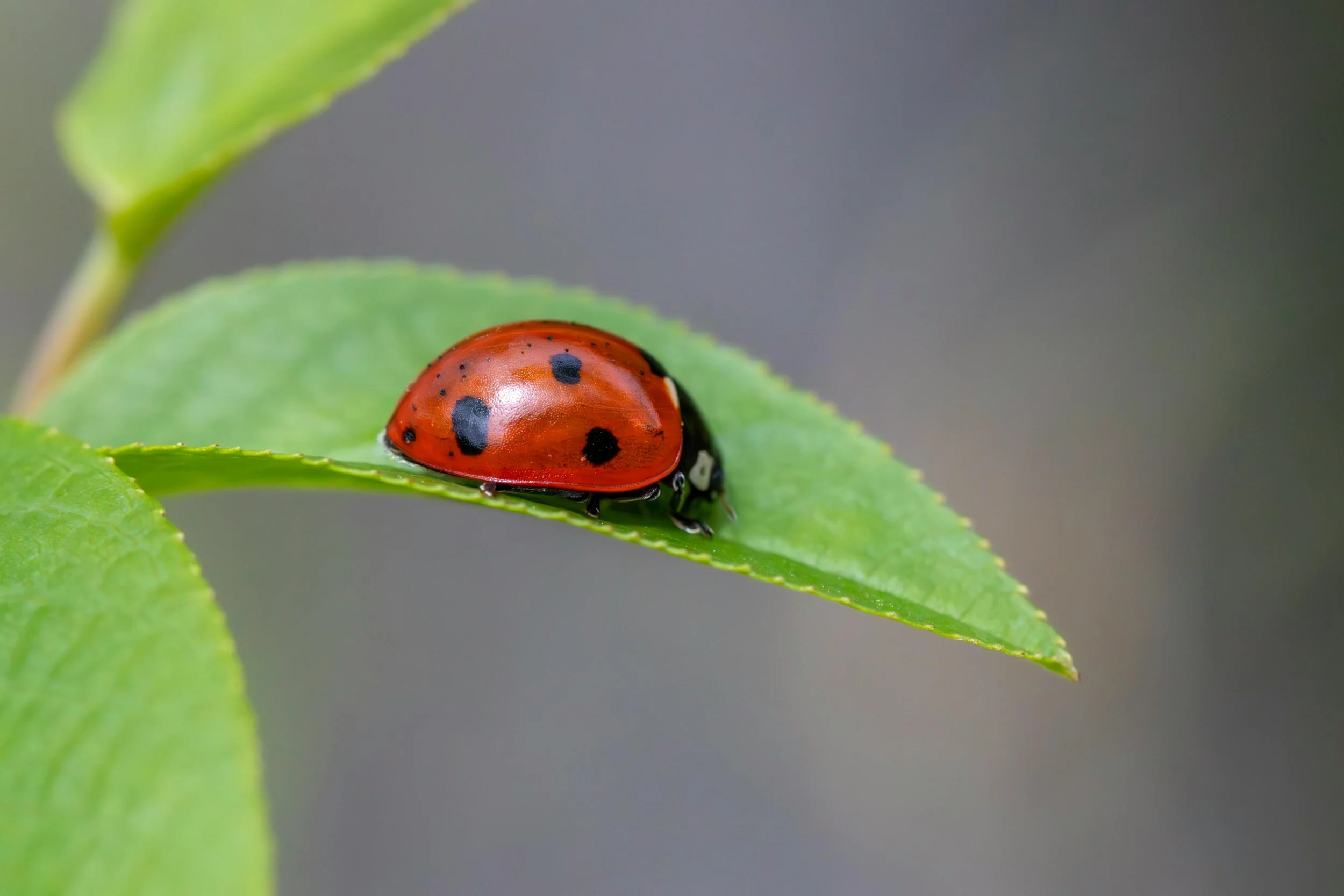
Ladybugs
The classic. Ladybugs (technically lady beetles) are aphid-eating machines, and a single beetle can eat thousands of aphids in its lifetime. The larvae — which look like tiny black-and-orange alligators — are even hungrier than the adults. If you see one, don't squish it. You can purchase ladybugs at most garden centers, but the best long-term strategy is to plant the flowers they love (yarrow, dill, fennel, alyssum) and let them come to you. Learn more from UC IPM.
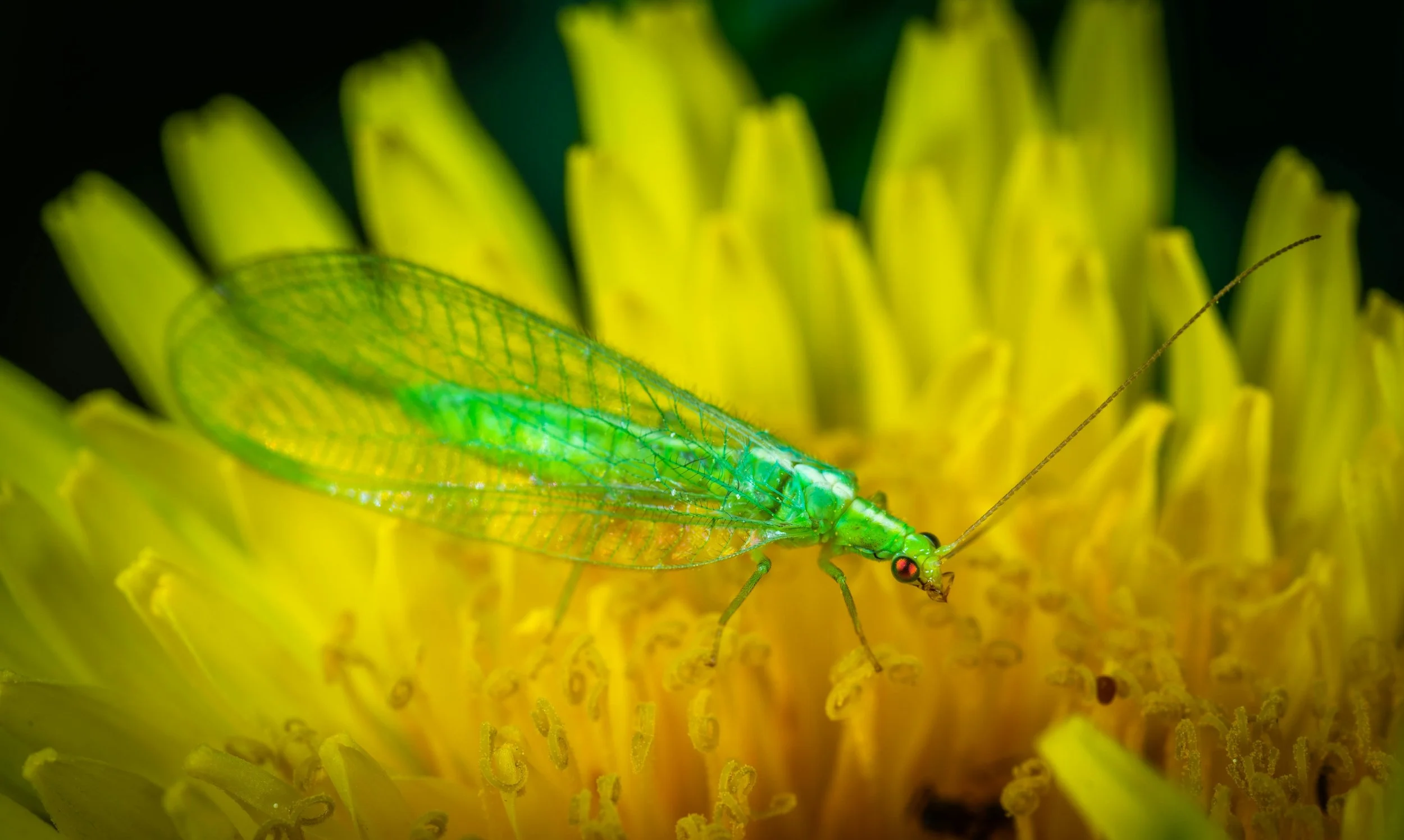
Green Lacewings
Lacewings are delicate, pale green insects with translucent wings — beautiful up close. But it's the larvae that do the heavy lifting. Sometimes called "aphid lions," lacewing larvae eat aphids, mealybugs, thrips, whiteflies, mites, and small caterpillars. You can buy lacewing eggs and release them in your garden, and they're a great companion to ladybugs. Learn more from UC IPM.
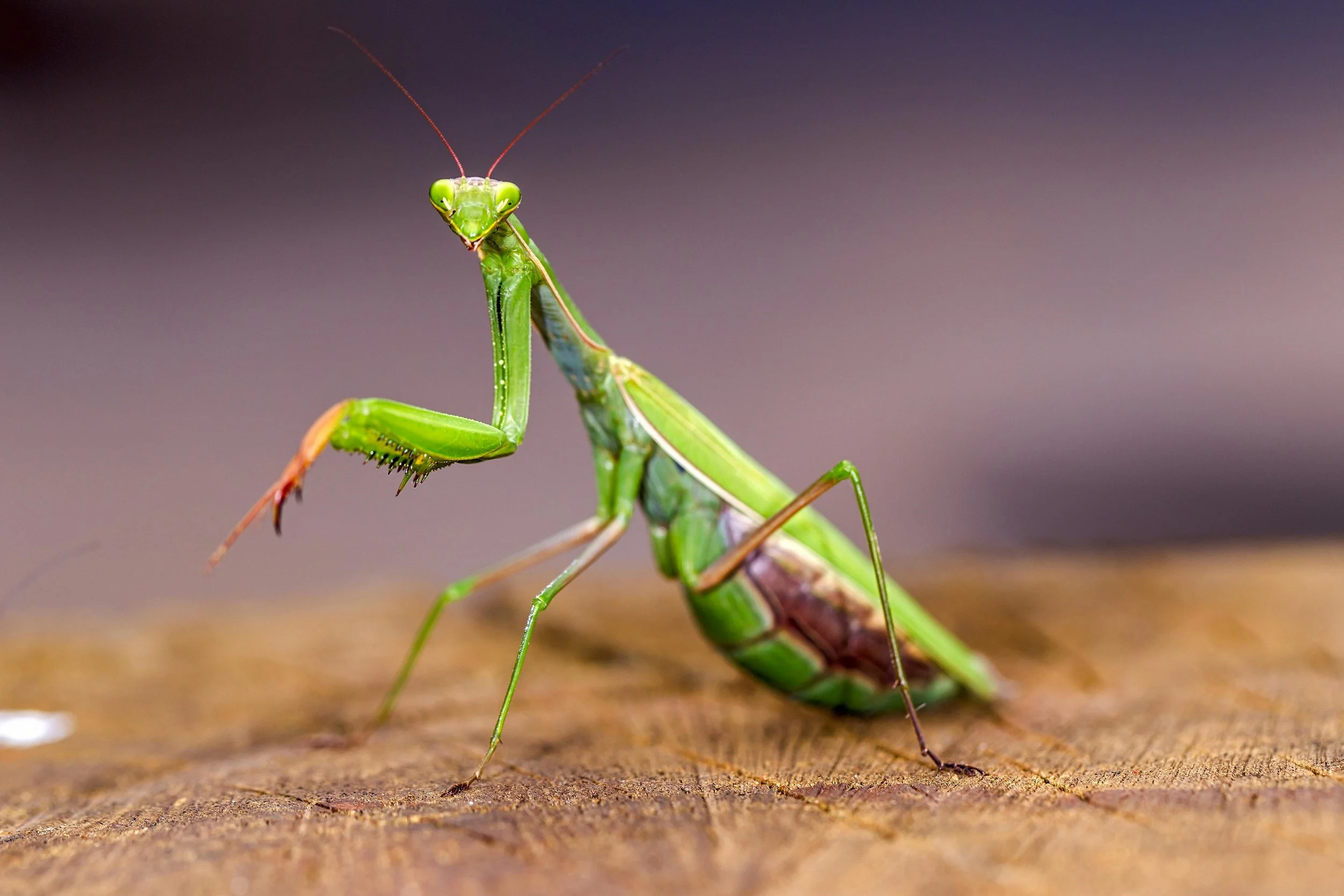
Praying Mantis
Praying mantises are dramatic predators — they'll eat just about anything they can catch, including pests. You can buy egg cases (called ootheca) and hatch them in your garden in spring. A word of honesty: mantises are generalist predators, which means they'll eat beneficial insects too, including each other. They're fascinating to have around, but they aren't a targeted solution. Plant some native shrubs and let them set up shop on their own terms. Learn more from UC IPM.
Now for the allies you probably won't find at the garden center — but who are out there in your garden whether you know it or not. You can't buy them, but you can absolutely invite them in by planting a diversity of flowering plants and avoiding broad-spectrum sprays.
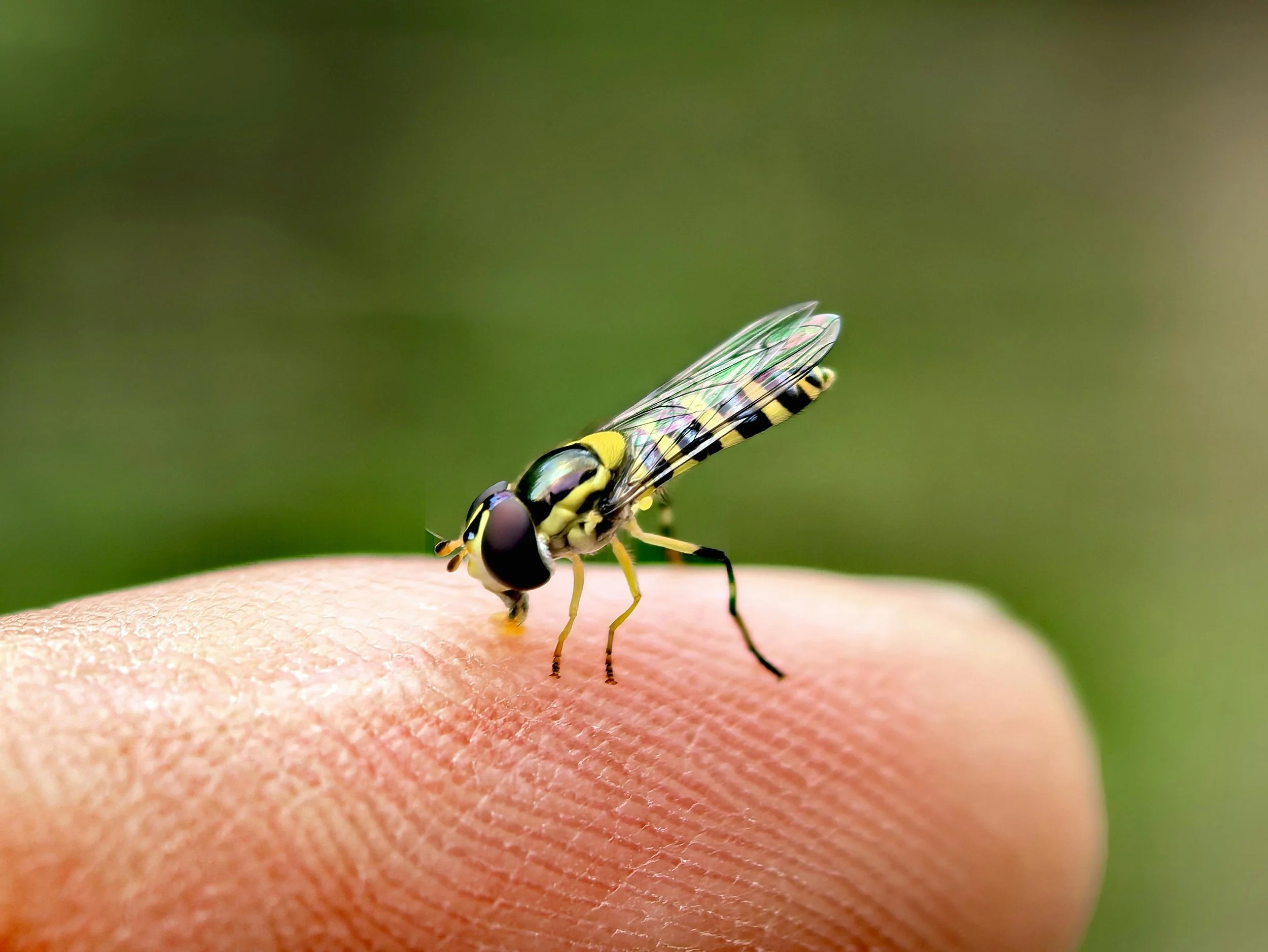
Hoverflies
Hoverflies look a bit like small bees or wasps, but they don't sting — they're flies. The adults are pollinators, and the larvae (small, sluglike, often greenish) are voracious aphid predators. They're one of the most overlooked beneficial insects in the Southern California garden. Learn more from UC IPM.
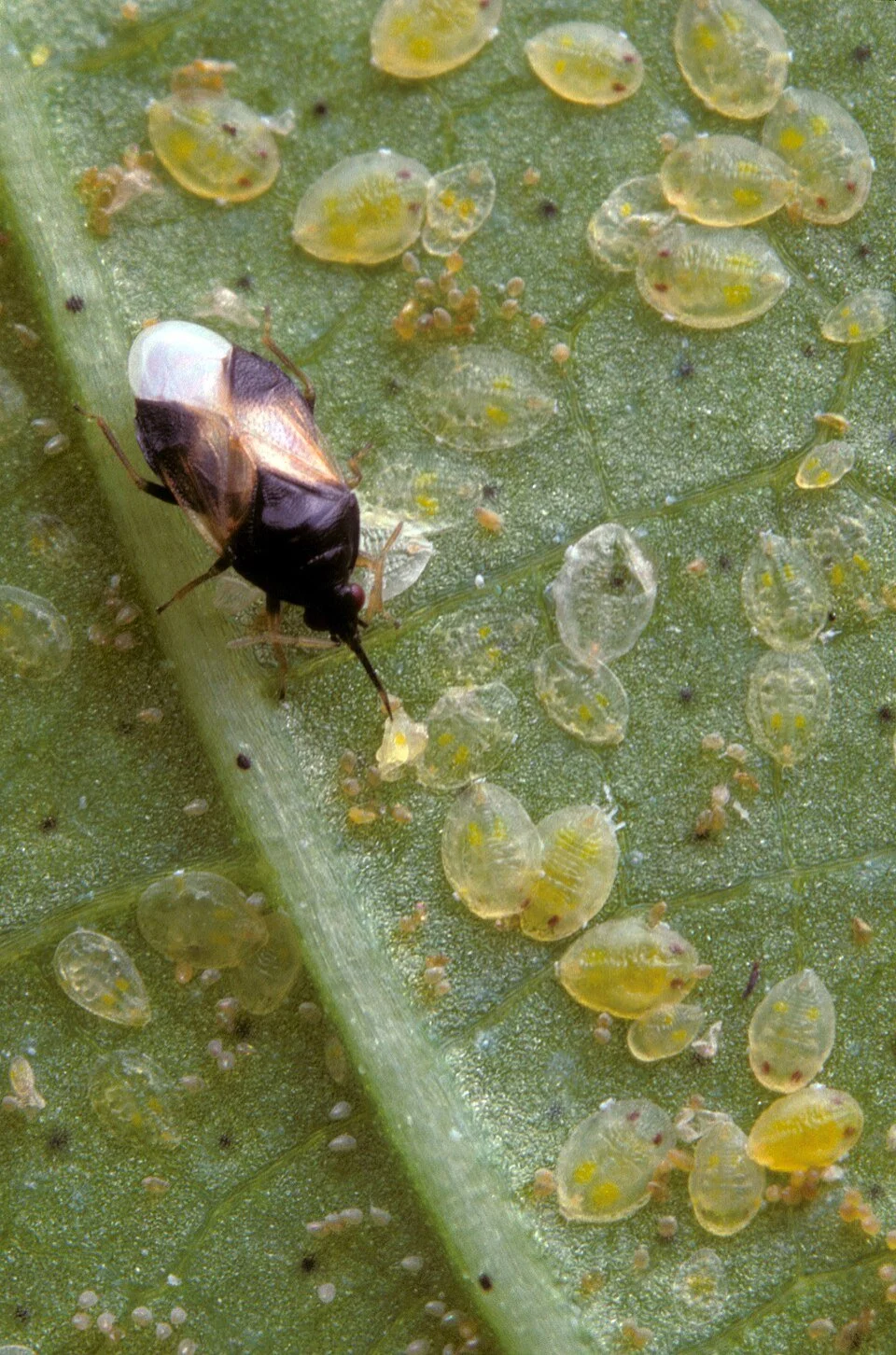
Minute Pirate Bug
These tiny black-and-white insects are barely visible, but they pack a punch. They feed on thrips, mites, aphids, and small caterpillar eggs. If you've ever been "bitten" by something invisible while gardening on a hot afternoon, it may have been a minute pirate bug — they sometimes test human skin out of curiosity. Don't hold it against them. Learn more from UC IPM.
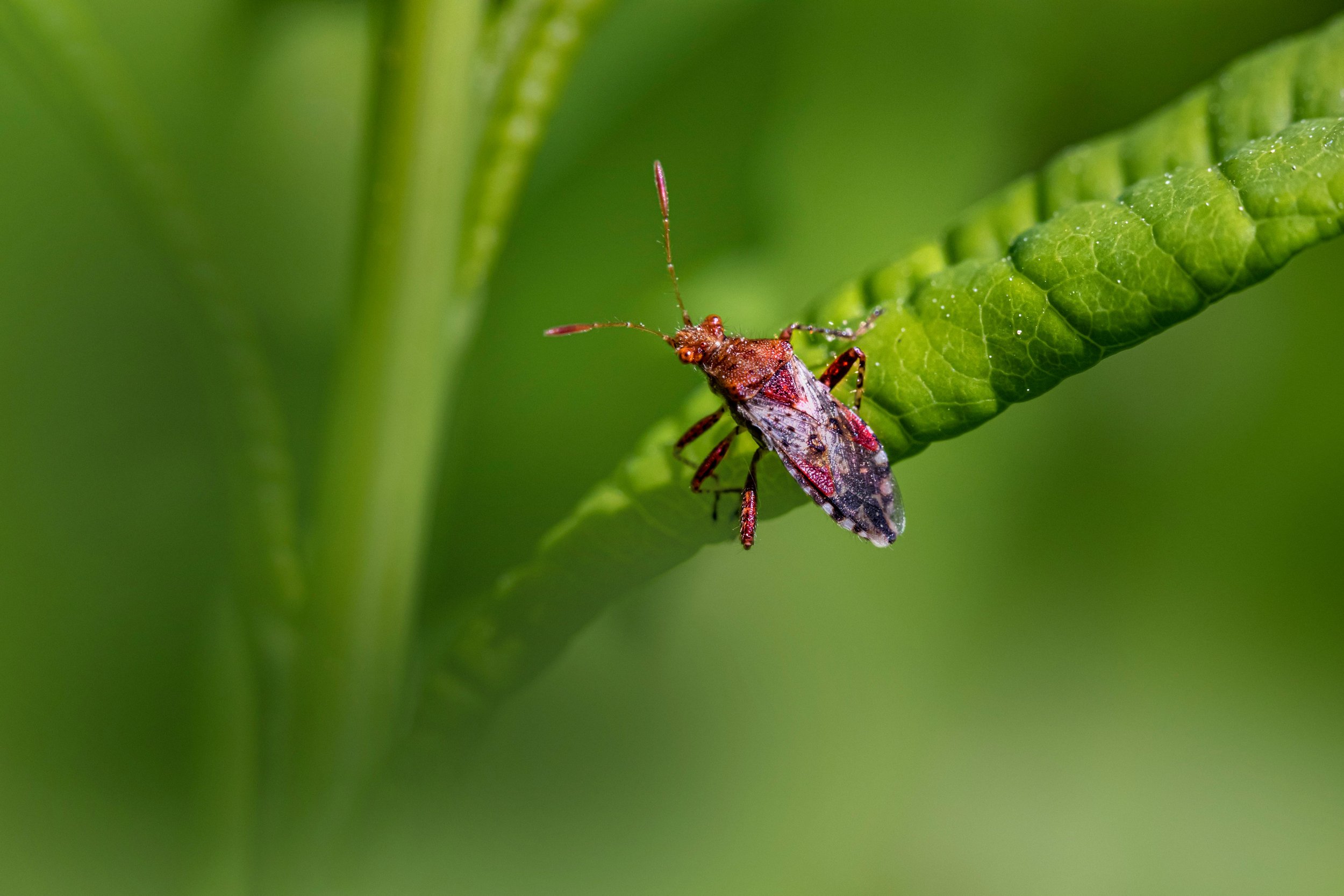
Assassin Bugs
The name is dramatic for a reason. Assassin bugs are stealthy ambush predators that take down caterpillars, beetles, and other garden pests. Most species are completely harmless to humans (though a few can deliver a painful pinch if handled, so look, don't grab). They come in a variety of shapes and colors — keep an eye out. Learn more from UC IPM.
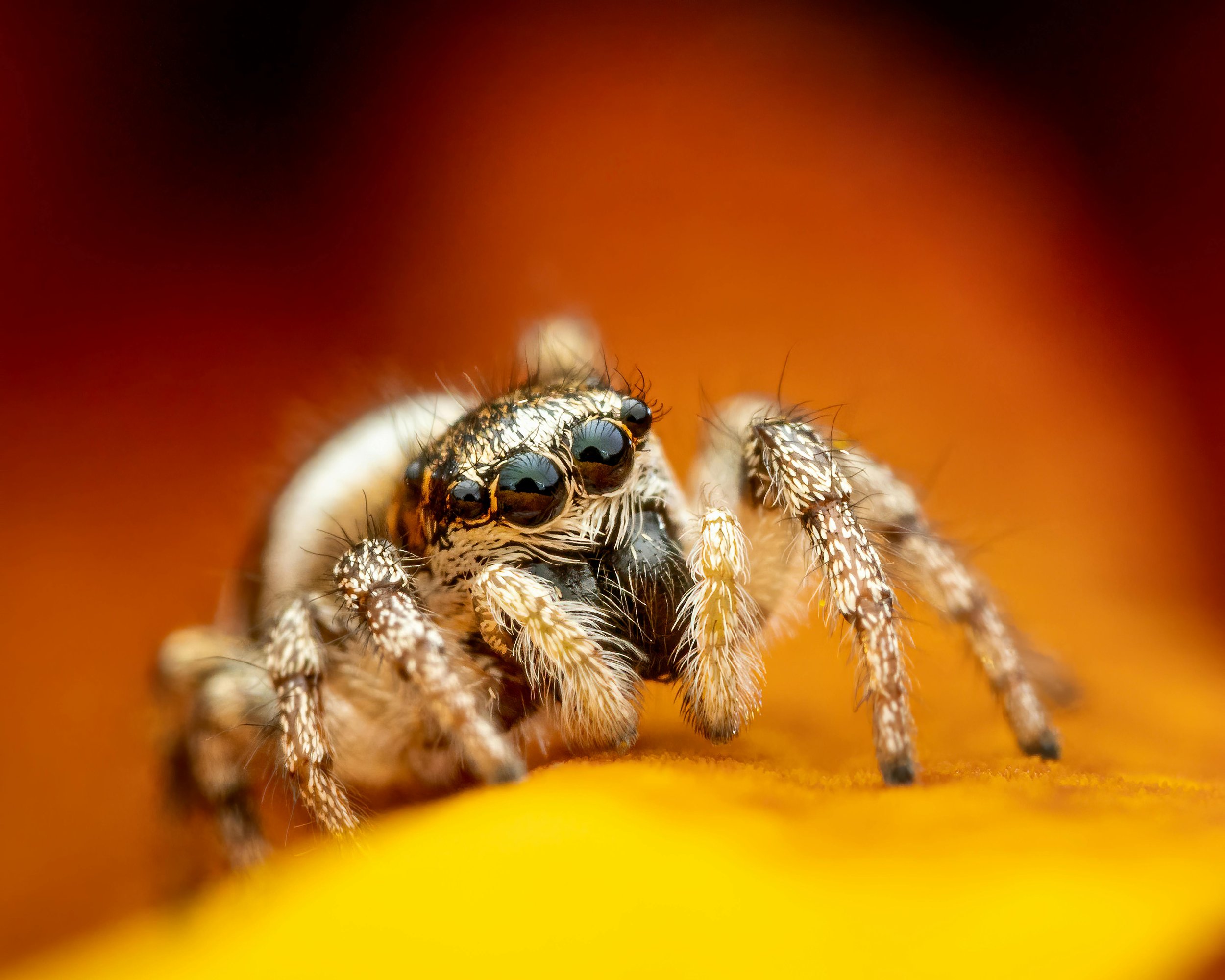
Spiders
Not technically insects, but absolutely essential allies. Spiders are some of the most important predators in any garden ecosystem. They eat huge numbers of pest insects, and they ask for nothing in return. Most of the spiders you'll encounter in a Southern California garden are completely harmless to you and your plants. Let them stay. Learn more from UC IPM.
This is just a starting point. There are hundreds of beneficial insects out there — far more than we could ever cover in a single newsletter — and you'll meet new ones every season. My encouragement to you is this: the next time you see something in your garden that you've never seen before, assume it's a good guy. Most of the time, it will be. Get curious before you get worried. Look it up, take a photo, watch what it's doing. The garden is full of allies we haven't met yet.
For more on identifying beneficial insects (and pests), UC IPM is the single best resource I know of — and it's already linked on the Resources page of my website, along with everything else I recommend to my students.
Thought of the Week
I've been thinking about what it means to assume the best of something before we know it.
In the garden, the lesson is clear enough. We see a strange bug, and our first instinct is suspicion — is it going to hurt my plants? But the truth is, most of the critters out there are either helping or doing no harm at all. The ones we should actually worry about are a tiny fraction. We don't judge a bug by its looks; we judge it by what it's doing. And most of the time, when we slow down and pay attention, we find that it's working alongside us, not against us.
I've been wondering lately if we owe each other the same.
We live in a strange moment. Social media, the news cycle, the algorithms shaping what we see — they all profit when we're divided. There's real power, and real money, in keeping us suspicious of one another. We get told over and over again that the people on "the other side" are different from us. That they want different things. That they're a threat.
But when I actually talk to people — neighbors, students, strangers, family members I disagree with about plenty — what I find, almost every time, is that we want the same things. We want our families to be safe. We want our communities to feel like home. We want to be respected. We want a future for our kids that's a little better than what we had.
Most people are good guys, if we let them be.
I'm not saying we'll agree on everything. We won't. But I think the next time we catch ourselves writing someone off because of a label we've attached to them, it's worth pausing and asking: Do I actually know this person? Or have I been handed a story about them?
The world I want to live in — one that's loving, peaceful, and stable — isn't something I can have just for myself. It only exists if my neighbors have it too. And theirs. And theirs.
So this week, in the garden and out of it: assume it's a good guy. You'll be right more often than you think.
