The Limits of a Good Plan
Welcome to this week's edition.
This one's a quiet one on the surface — no big project reveals, no dramatic before-and-afters — but underneath it I've been thinking a lot about the gap between what we plan and what actually grows. I’m about to put a whole collection of new plants in the ground, most of them not for food at all, and I find myself chewing on something bigger than the garden. More on that at the end.
Quick note: my Monday Garden Hangout livestream is on this week, and I'll be walking through several of the plants I talk about below — the comfrey, the sweet potatoes, the cover crops — explaining exactly where each one is going in the yard and why. If you've ever wanted to see the reasoning behind the placement, this is the one to catch. Join me here. One heads-up: there won't be a Hangout the following week (June 1st). My work schedule has me cutting back on livestreaming for a bit, but I will update you all with the new schedule in the coming weeks!
For Students
Regenerative Gardening
This week we land on Principle #7 — "Grow Food That Nourishes." We're talking about the Slow Food movement and the true value of our home gardens: what it really means when the food on your plate carries the full story of how it was grown, not just how it tastes. We'll get hands-on with methods of food preservation, too — pickling, fermenting, and more — because growing the food is only half of it; keeping it is the other half.
Come ready to talk. Our group discussion this week is one I think you'll chew on: imagine every meal came with the full story of how it was grown, processed, and transported. Do you think that would change how people eat? There's no right answer — I just want to hear how you think about it.
Fundamentals of Sustainability
We're continuing Building Sustainable Communities, Part 2. This is the collaborative stretch where we develop a real action plan for the sustainability issue we've chosen — and this term's topic is a meaningful one: how we care for our veterans, and how that care could be made more sustainable. As always, we'll look at it across all three levels — personal, community, and national — and ask where the real leverage is. It's a different kind of topic than we usually take on, and I think that's exactly why it's worth doing. Come ready to define the problem, set clear goals, and start outlining a step-by-step strategy we can actually act on.
A quick note on videos
There are no videos to share this week. Both classes were hands-on, full of activity and discussion rather than screen time. I’ll have more videos to share next week!
Community News
A couple of things worth getting on your calendar:
I'll be at the LA County Fair this Sunday, May 24th (today if you’re reading this when it comes out), tabling in the farm area for my nonprofit, RLGP. Beyond the nonprofit, I'll be there to share what I'm up to on the education side — my classes at Mt. SAC and my YouTube channel — and I'll have a regenerative question challenge going for anyone who stops by, with questions on regenerative gardening practices and nutrition. Come test yourself and say hello — just look for the farm area and you'll find us.
And mark your calendars for the Annual Garden Friends Plant Sale in Covina, happening Friday, June 12, 2026, at Holy Trinity Episcopal Church (100 N 3rd Ave, Covina). A great chance to find something new for your own garden — and maybe start an experiment or two of your own.
In the Garden — Everything Here Is an Experiment
I recently ordered a collection of plants, and almost none of them are going into the ground for the reason you'd assume. A few are food. Most are workers — plants chosen for the jobs they do in the system rather than what they put on the table. And here's the honest truth underneath all of it: even the plants I know well, I've never grown in this soil, under these trees, in this particular system I'm still building. So in a real sense, every single one of these is an experiment. Some I'm fairly confident about. Some I have no idea about and planted purely because I was curious. I'm at peace with that. A new garden is an experiment — I plant with intention, but I stay open to surprise.
A note on how I think about these: I'm not planting most of them in tidy rows in a dedicated bed. They're going into the gaps — tucked around the three young fruit trees I just put in, alongside the logs lying next to the pathway, under the dripline of established trees like our citrus, into whatever open space is asking to be filled. That's the regenerative move. You don't leave bare ground; you find a plant to do a job there. Here's what went in, and what each one is actually for.
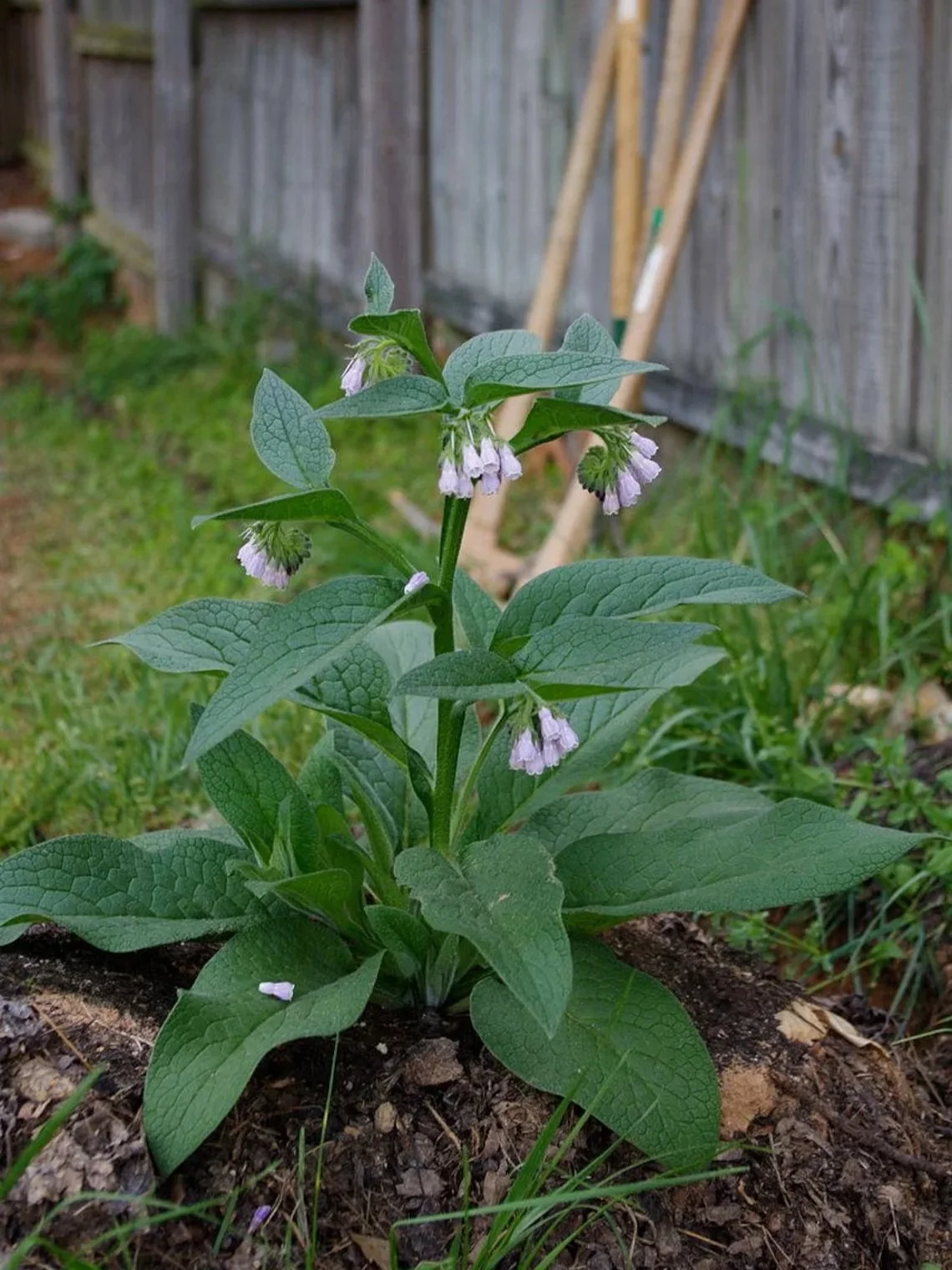
Bocking 14 Comfrey
This is one of my hardest-working plants and one I'll never eat (comfrey isn't for the plate). Its deep taproot mines nutrients from far below the surface and pulls them up into its leaves, which makes it a dynamic accumulator. I'll chop those leaves and drop them as mulch around the garden, and toss any excess onto the compost pile. It feeds the system without ever feeding me directly. An important note: Comfrey is highly invasive here in California. I’m using Bocking 14, which is propagated via root cuttings — it does not produce seeds. If you want to grow comfrey in our area, make sure you have the right type!
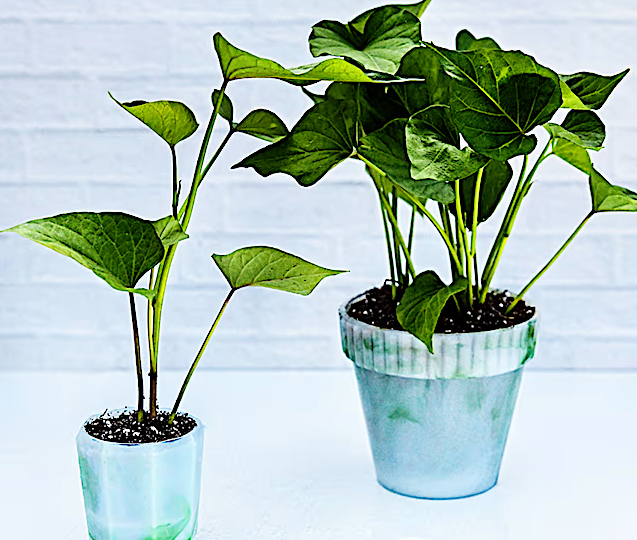
Sweet Potatoes — Lilac Beauty & Carogold
Here's a fun one. Most of these slips are going in near my trees, and I'm not planting them to harvest tubers. I'm using them as a deciduous perennial groundcover — a living mulch that sprawls out to shade the soil and suppress weeds, comes back each spring, and dies back when it cools. I'll leave the tubers in the ground year after year. Now, full disclosure: most places treat sweet potatoes as an annual, and in colder climates they won't survive the winter at all. I think I can get away with the perennial approach because I'm here in California with sandy soil that won't hold cold, wet conditions around the tubers — but I'll be honest, this is one of my experiments too. We'll see if the ground agrees with me. What I will harvest regardless is the greens, which are delicious and edible. (Important distinction: sweet potato greens are edible; ordinary potato greens are not — different plant entirely, so don't go grazing your potato patch.)
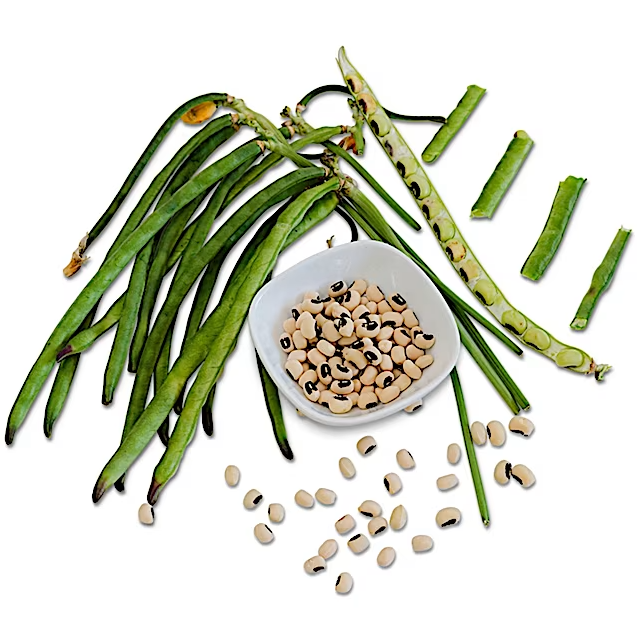
Cowpeas — Red Ripper, California Blackeye Pea & Blue Goose
My summer cover-crop workhorses. They're nitrogen fixers, they shrug off our heat, and they grow fast. I'll plant them wherever I've got open space around the new trees, let them get up to size, then chop-and-drop them right where they stand to feed the soil. And yes — they're edible. The cover-cropping is the primary job, but that doesn't mean I won't pick some peas along the way. That's the thing about these functional plants: the "main" purpose rarely turns out to be the only purpose.
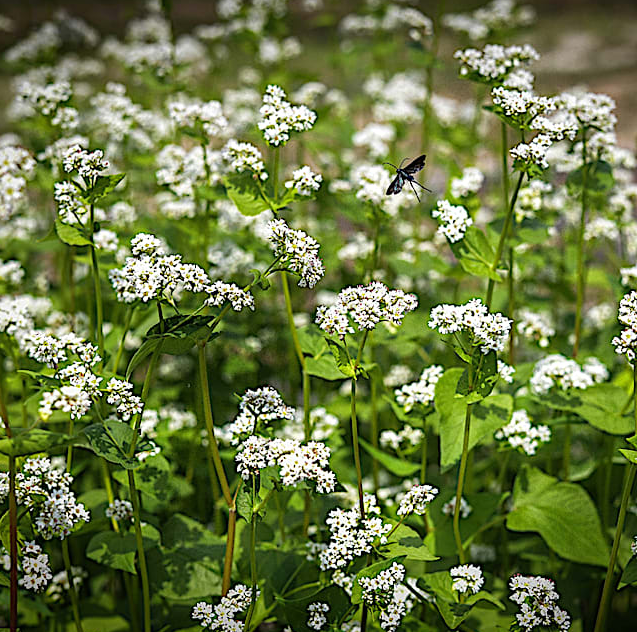
Buckwheat — White
A quick-growing pollinator magnet that bees adore, with the bonus of loosening compacted soil and breaking down fast once chopped. Another chop-and-drop player. One wrinkle I'm working through, though: I've already got wood chips down with wine cap mushroom spawn running through them, and dropping green material on top is a balancing act. Too little and there's nothing wrong — but if I let the chips fully break down without replenishing them, the wine caps lose their food source and starve out. And if I pile on too much green material in a thick layer, the area can go anaerobic — oxygen gets choked off, which is bad news for both the wine cap spawn and the general health of the soil. So it's a Goldilocks situation: a moderate amount of greens to build organic matter, plus regular top-ups of fresh chips. I'd be adding more chips over time anyway, since the wine caps chew through them so quickly.
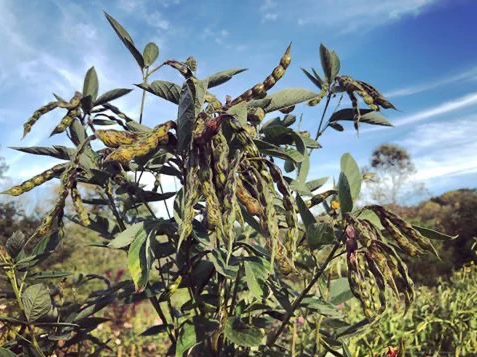
Northern Adapted Pigeon Peas (Gandules)
These I'm using almost like living infrastructure. I'm planting them to the west of my new fruit trees so that, as they grow tall, they throw a little dappled late-afternoon shade over the young trees — protection through their vulnerable first year in the ground. They're nitrogen fixers with a woody, semi-perennial structure, and I'll chop them back as needed for biomass. Eventually I'll pull them entirely and compost them once the trees can stand on their own. I may also try a few in the partly shaded spot where a fig and a mulberry are going this fall, to start prepping that soil now. And though shade is the main job — they do produce edible pods, so I won't be surprised if I end up eating a few.
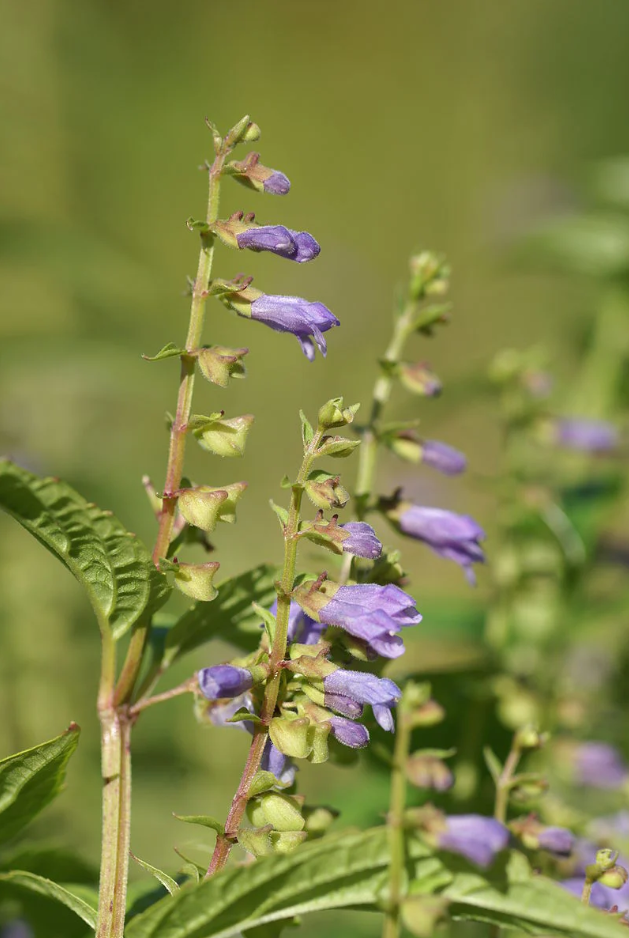
Skullcap
An herb headed for the understory beneath a dripline, and a small personal milestone: I first read about skullcap in an herb book as a kid and was fascinated by it, but I've never actually grown it — so this is my first time putting it in the ground. It gets its name from its purple-blue flowers, which look like little medieval helmets, and this mint-family relative pulls double duty: a medicinal herb I'll have on hand in the yard, and a genuine beacon for pollinators.
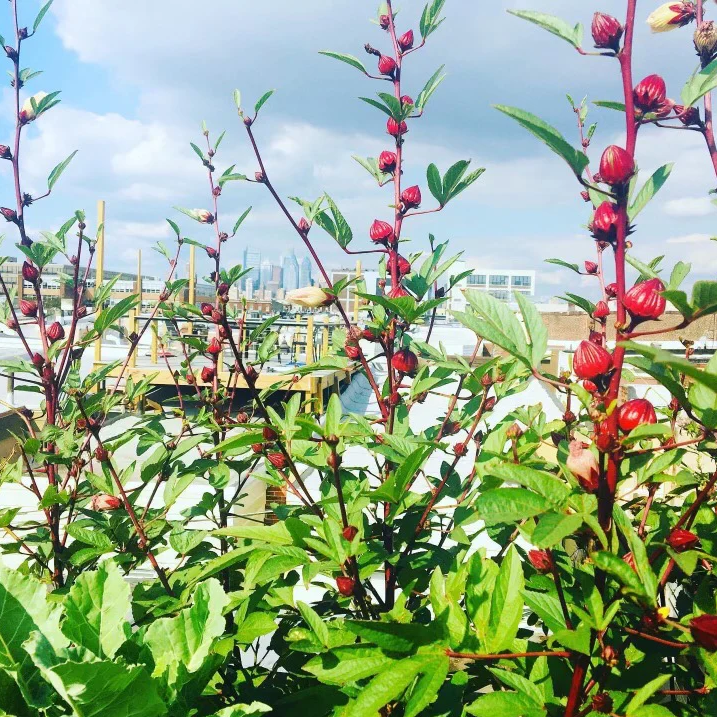
Chin Baung (Burmese Roselle Leaf)
Pure curiosity, this one. A quick clarification so nobody gets confused: Chin Baung is a variety of Roselle (Hibiscus sabdariffa), but it's bred in Burmese cuisine specifically for its sour leaves and shoots — it's known as "sour leaf" for the tangy tartness it brings to soups and stir-fries. That's different from the standard Roselle grown for the deep red calyces, which is what traditional agua de jamaica is made from. I originally grabbed this hoping to make something like jamaica, and it might produce usable calyces — but this is really a foliage crop, so I honestly don't know how that'll go. And that's fine. The flowers will take care of the pollinators either way, and truthfully I want more home-grown greens in my diet a lot more than I want more tea. Sometimes "I wonder what this does" is reason enough to find a spot for it.
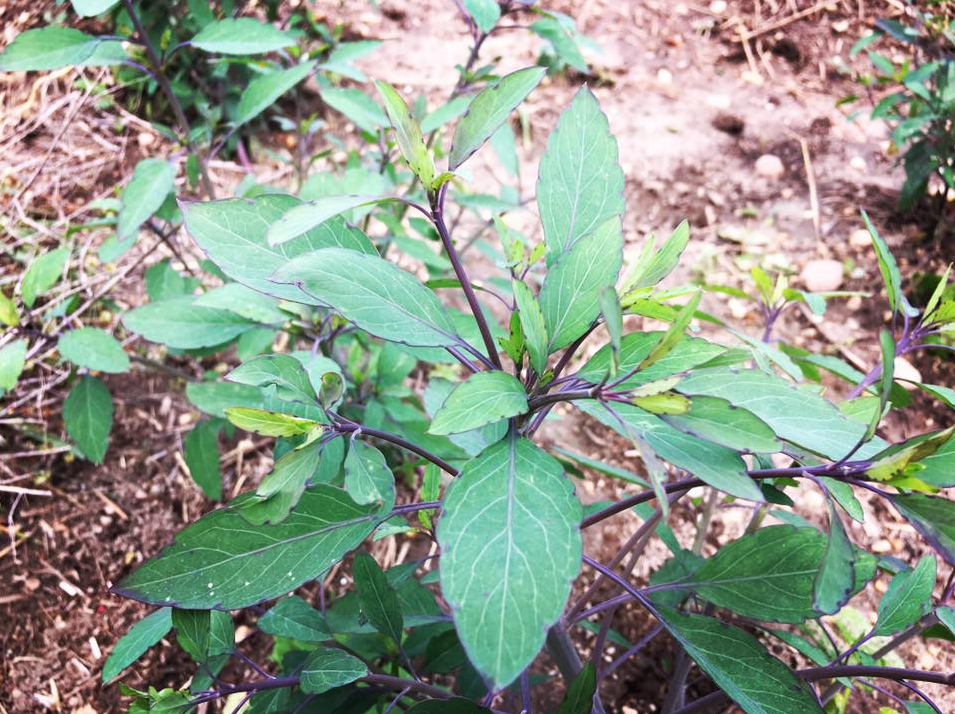
Quillquiña (Bolivian Coriander)
Another experiment, born of frustration. My cilantro is bolting faster than normal this year, so I'm testing this as a possible stand-in. It has unique oil glands on its leaves that give it a potent cilantro-meets-arugula flavor, and — crucially — unlike cilantro, it actually loves the high summer heat instead of bolting in it. I have no idea yet whether I'll like it, but more biodiversity is rarely a bad bet, and the only way to find out is to grow it.
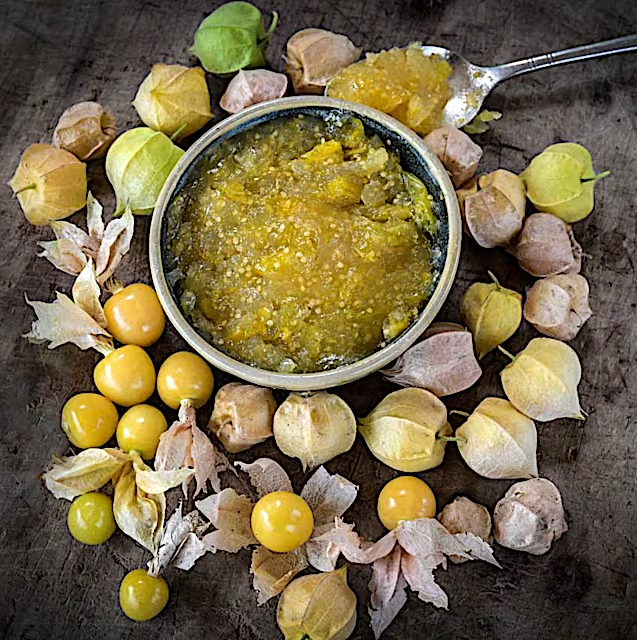
Ground Cherries (Aunt Molly's)
A plant I’ve never grown that I will be tucking into pockets here and there. The fun thing about these is their built-in ripeness timer: you don't pick them off the plant, you just wait for them to drop to the ground in their little paper husks when they're perfectly ripe. They taste like a wild cross between a tomato and a pineapple. The one real caution: these are nightshades, same family as our tomatoes and peppers, and we already have a lot of nightshades spread around the yard. So I have to be deliberate about placement to avoid concentrating any potential pest or disease pressure. Worth the care, though — I've been wanting to try them.
That's the collection. Some are sure things (or as sure as anything gets in a brand-new system), some are total wild cards, and nearly all of them are working a job beyond the harvest. We'll see what thrives. That's rather the point.
Thought of the Week
Sitting here with seeds, root cuttings, and slips in hand ready to be planted, I keep circling one idea: I can make dozens of careful decisions, and I have almost no control over how any of them turn out.
I’m putting the pigeon peas to the west for the afternoon shade. I’ll set the comfrey where I'll want mulch. I’ll tuck the ground cherries away from the other nightshades. Every placement will be deliberate — I’m bringing everything I know to those choices. And then I will water them in and walk away, fully aware that the soil, the weather, the bugs, and a hundred things I can't see will decide what actually happens next. I don't get to control it. I set things in motion and then watch.
That's the limit of a good plan. We're taught to plan our way to certainty: research it, weigh it, wait until you're sure, then act. But the things that matter most don't work that way. You don't find out whether a move, a relationship, a career change, a hard conversation is going to turn out by thinking harder about it beforehand. You find out by entering it. The knowing comes after you commit, never before. We don't get to live the certain version of our lives — only the planted one.
The trick, I think, is to hold two things at once: do the real work of deciding well, and make peace with the part you can't command. Plan with care, then loosen your grip. While we can’t control the hiccups, mistakes, or unforeseen circumstances that inevitably muddy up our lives, we CAN decide how to react to whatever comes our way.
That's what the whole yard is right now: a bet on a harvest I can't see yet, tended as well as I know how, and then released. We’ll see how it all turns out.
That's it for this week. Catch me Monday evening for the Garden Hangout, and I'll see some of you at the fair.
